

The envelope on Danny’s doormat was addressed to “The Occupier”, which felt like a bad sign. The 27-year-old chef from Stoke-on-Trent had moved flats in March, paid his council tax on time, and assumed the voting side sorted itself out. It doesn’t. No poll card came, because paying bills registers nothing. The fix was smaller than his lunch break: you can register to vote online in about 5 minutes, and this guide covers exactly how, what you need, and the deadlines that catch people out.
Registering to Vote at a Glance
| Official service | gov.uk/register-to-vote — free, no account needed |
| Time it takes | About 5 minutes, says GOV.UK |
| What you need | Name, address, date of birth, National Insurance number (a route exists without one) |
| Minimum age to register | 16 in England and Northern Ireland; 14 in Scotland and Wales |
| Deadline before an election | 11:59pm, 12 working days before polling day |
| Checking you’re registered | Contact your local electoral registration office — there’s no national lookup |
| On polling day | Photo ID required in Great Britain; free Voter Authority Certificate if you have none |
The Five-Minute Job on Your Lunch Break

Danny did it standing by the kitchen pass, phone in one hand, tea in the other. Go to the official GOV.UK register to vote page and the form asks for your name, address, date of birth and National Insurance number. That’s the lot. GOV.UK says it usually takes about 5 minutes, and unlike checking your tax code, there’s no password and no Government Gateway account to set up: it’s a one-off form, not a login. You register once, not for every election, and it costs nothing. Prefer paper? A printable form works in England, Scotland and Wales, posted to your local electoral registration office, while Northern Ireland runs its own system through EONI. Your NI number sits on payslips, P60s and pension letters, so dig one out first.
Who Can Register — and From What Age

Danny’s flatmate Zofia, who’s Polish, assumed the service wasn’t for her. Wrong again. British and Irish citizens can register, along with qualifying Commonwealth citizens and certain EU citizens, including Polish, Portuguese, Spanish, Danish and Luxembourg nationals, plus other EU citizens with permission to stay granted by the end of 2020. Age rules depend on where you live: in England and Northern Ireland you can register from 16, though the voting age there is still 18. In Scotland and Wales you can register from 14, because 16 and 17-year-olds already vote in Scottish Parliament, Senedd and council elections. GOV.UK lets you register up to 2 years before you reach voting age. British citizens abroad register with their passport details instead, so if yours has expired, applying for a passport online comes first, and overseas registrations need renewing every 3 years.
Votes at 16: Where the Law Stands This Autumn

Here’s the question Danny’s teenage cousin keeps asking: can she vote yet? Across the whole UK, not quite. The government said in July 2025 it wants the voting age lowered to 16 for all elections, and the Representation of the People Bill reached the Commons on 12 February 2026. MPs passed its remaining stages on 2 September 2026, and the bill is now being examined by the House of Lords, so it isn’t law yet. If it passes, around 1.7 million 16 and 17-year-olds would gain a vote in UK Parliament elections, and registration could become partly automatic, using data the government already holds — a shift that sits alongside the UK’s digital ID plans. Until then, it’s 16 for Scotland and Wales’s devolved elections, 18 everywhere else.
Already Registered? Here’s How to Check
The odd part is that Danny couldn’t just look himself up. No national website shows whether you’re registered — government services are slowly joining up under GOV.UK One Login, but the electoral register isn’t one of them. To check, contact your local electoral registration office — GOV.UK’s postcode search gives you their phone number and email — and they’ll confirm in minutes. Northern Ireland is the exception, with an online “Am I Registered?” checker on the EONI website. If you’re unsure, registering again does no harm, since the office simply matches you to the existing entry. Ignoring it carries a cost, too: fail to respond when the office formally asks you to register and you can be fined £80. A confirmation letter arrives about a week to ten days after you apply.
Moving House Resets the Clock

This was Danny’s actual mistake. Registration sticks to an address, not a person, so every move means filling in the five-minute form again, alongside the chores you face when you change your address across UK government services. Timing matters most here. Registration closes at 11:59pm, 12 working days before polling day, and miss it by an hour and you sit that election out. Postal voters have it tighter still: apply online with your NI number and a photo of your handwritten signature, in black ink on white paper, by 5pm, 11 working days before the poll — and after a move you re-register first, then reapply. Postal votes now expire every 3 years, and proxy applications close at 5pm, 6 working days before.
The Open Register: One Tick Box for Your Privacy

Halfway through the form sits a box most people skim past. There are two versions of the register. The full one runs elections, prevents crime, checks credit applications and summons juries, and everyone appears on it. The open register is different: anyone can buy it, including marketing firms, which is how mystery catalogues find new addresses. You can opt out when you apply, or later through your registration office, and opting out doesn’t affect your right to vote. It’s the same instinct that leads people to freeze your credit file: share less, lose nothing. People whose safety depends on staying hidden, such as domestic abuse survivors, can register anonymously instead, using a court order or a letter from a senior police officer, doctor or refuge manager, renewed yearly.
Don’t Get Turned Away: Photo ID on Polling Day
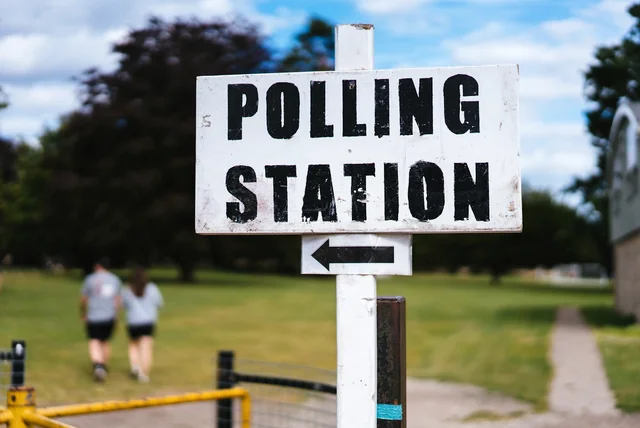
Registering gets your name on the list; getting a ballot paper takes one more thing. Since 2023, voters in Great Britain must show photo ID at polling stations. The accepted list is longer than people think: a passport, a photocard driving licence, a PASS proof-of-age card, a biometric residence permit, a Blue Badge, older or disabled person’s bus passes, and the HM Armed Forces Veteran Card all count — see the full list of accepted photo ID on GOV.UK. Expired documents still work, as long as the photo looks like you. Danny’s out-of-date passport got him a ballot anyway. No ID at all? Apply for a free Voter Authority Certificate with a digital photo and your NI number, by 5pm, 6 working days before the poll. The pending bill may add UK bank cards, but nothing has changed yet.
The Credit Score Bonus Nobody Mentions

Two months after registering, Danny got a small, unexpected reward: his credit score ticked upward. Lenders are allowed to use the full electoral register to confirm a name and address, so appearing on it makes you easier to verify and less risky on paper. Experian puts it plainly, saying your electoral details help lenders confirm who you are, and your score increases as a result. The update normally reaches your credit report within 30 days, though it can take longer during the autumn canvass. Renters feel this most, because without a mortgage or years at one address, the register is often the strongest proof of stability a file has. Once you’ve registered, check your credit report free a month later and confirm the entry has landed. Opting out of the open register won’t undo any of this.
Five Minutes Well Spent
Danny registered to vote online from the number 25 bus, opted out of the open register, and his poll card arrived addressed to him, not “The Occupier”. That’s the whole job: one short form, a privacy tick box, photo ID on the day, and a small credit boost as a bonus. Deadlines only feel generous until an election is called, so do it this week while it’s still a five-minute errand.
Frequently Asked Questions
How long does it take to register to vote online?
About 5 minutes, according to GOV.UK. You fill in one form at gov.uk/register-to-vote with your name, address, date of birth and National Insurance number.
How do I check if I’m already registered to vote?
There’s no national lookup in Great Britain. Contact your local electoral registration office via the GOV.UK postcode search; Northern Ireland has an online checker on the EONI website.
Do I need a National Insurance number to register to vote?
No. The form asks for one, but you can still register without it — your electoral registration office may request other proof of identity instead, such as a passport.
Can 16-year-olds vote in the UK?
In Scottish Parliament, Senedd and local elections in Scotland and Wales, yes. For UK Parliament elections the age is 18, though a bill to lower it is before the Lords.
Does registering to vote help my credit score?
Yes. Lenders use the full electoral register to confirm your name and address, and Experian says your score increases once your details appear, usually within 30 days.
Disclaimer: This article is general information, not legal or financial advice. Election rules and the Representation of the People Bill can change; check GOV.UK or the Electoral Commission for the latest position. Details correct as of September 2026.