

The advert said “MOT till June, drives lovely”. Sam, a nurse from Preston, stood on a stranger’s driveway in Chorley with £4,200 of savings in her account and no way of knowing whether to believe a word of it. Except she did have a way. It takes about sixty seconds to check MOT history on any UK vehicle, free, using nothing but the number plate. Every pass, every failure, every advisory and every recorded mileage since 2005 sits on GOV.UK, waiting to be read. Here’s how to read it properly.
Checking MOT History at a Glance
| Official service | www.gov.uk/check-mot-history |
| Cost | Free — no account or login needed |
| What you need | The vehicle’s registration number (number plate) |
| Records go back to | 2005 for cars, vans and motorcycles in Great Britain; 2017 in Northern Ireland |
| What it shows | Pass and fail results, mileage at each test, failure reasons, advisories, expiry date |
| Maximum car MOT fee | £54.85 — and no VAT on top |
| Driving without an MOT | Fine of up to £1,000 |
What the Free GOV.UK Check Actually Shows

Back at her kitchen table that evening, Sam typed the Corsa’s registration into the official DVSA service and watched five years of the car’s life appear. For every test since 2005 you see whether the vehicle passed or failed, the mileage recorded on the day, which parts failed and which had minor problems, plus the current expiry date. You can even download copies of the current and previous MOT certificates. There’s no sign-in at all — unlike HMRC services that need a Government Gateway account, this one asks for nothing but the plate. MOT history is a public record, so you can look up any car in the country, whether you own it or not.
How to Run a Check in Under a Minute

The process is short enough to do on a phone while the kettle boils — Sam ran her second check standing at the bus stop the next morning. One optional extra exists for owners: to see where each test was done, you’ll need the 11-digit reference from the V5C log book. While you’re in DVLA mode, it’s a good moment to check your driving licence points online too, so ten minutes of admin clears two jobs.
- Open the official GOV.UK MOT history page.
- Type the registration exactly as it appears on the plate.
- Press continue, then scroll through every test, newest first.
Advisories: The Small Print That Tells the Truth

The results use four labels, and they matter. “Dangerous” and “major” defects mean a fail — dangerous means the car shouldn’t be driven at all until it’s fixed. “Minor” problems still allow a pass but need repairing soon. “Advisories” are the tester’s early warnings: tyres wearing towards the legal limit, brake components on their way out, corrosion starting underneath. A single advisory is normal life for an ageing car. The pattern is what talks. If the same advisory appears year after year, nobody ever fixed it, and that tells you how the car was cared for. Budget for those repairs before you offer a price, and put some thought into finding a garage you can trust to quote for them honestly.
The Mileage Column: How to Spot a Clocked Car
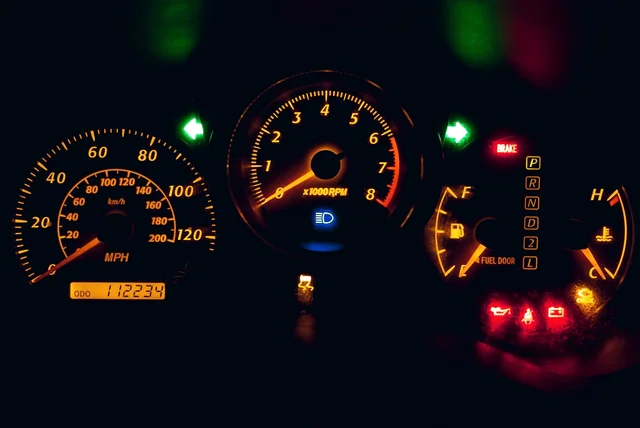
Here’s the part that saved Sam £4,200. Every MOT record includes the mileage on the day of the test, which means the history doubles as a free clocking detector. Read the numbers from oldest to newest: they should climb steadily, roughly the same amount each year. A figure that ever goes backwards is a walk-away moment — someone has wound the odometer or swapped the instrument cluster. Suspiciously flat years deserve questions too, as does a dashboard reading today that’s barely above the last test from months ago. Cross-check the odometer in the car against the newest record before money moves, the same way you’d insist on checking a used car for outstanding finance before signing anything.
Before You Buy: Match the Seller’s Story to the Screen

The Chorley seller had told Sam “one careful owner, garaged, never missed a service”. The screen told her the car had failed twice for corroded brake pipes and carried the same suspension advisory three years running. When the story and the record disagree, believe the record — it was written by testers with no reason to flatter anyone. Gaps matter as well: a missing year might mean the car was declared off the road, or it might mean something less innocent, so ask. This five-minute habit is especially valuable for first-time buyers who’ve only just passed — if you’re still at the stage of working out how to book a driving test online, file this away for the day the licence arrives.
The Second Free Check: Tax, SORN and MOT Together

GOV.UK runs a second free lookup that pairs nicely with the first. The vehicle enquiry service takes the same registration number and shows whether the car is taxed or registered off the road with a SORN, alongside its MOT status. Sam ran it on the Corsa out of habit and found the tax had lapsed weeks earlier — another small red flag about how the car was being looked after. The two records are connected in law, because you cannot renew road tax on a vehicle whose MOT has expired. If a car you’re viewing shows both problems at once, the seller has homework to do before you should even tax the car online yourself.
Never Miss Your Own MOT Again

The check works just as well pointed at your own driveway. The expiry date sits at the top of the results, and GOV.UK will send free reminders by text or email a month before the test is due — two months for lorries, buses and large trailers. The rules themselves haven’t moved: a car needs its first MOT by the third anniversary of its registration, then one every year. The government looked at stretching that first test to four years and decided against it in January 2024, after Department for Transport figures showed around 1 in 10 cars fail at the first attempt. Set the reminder, then use the spare minutes to renew your driving licence online if the photo’s ten years old.
Fines, Recalls and Lost Certificates

Letting the date slip gets expensive. Driving without a valid MOT risks a fine of up to £1,000, and driving a car that failed with a dangerous defect can bring a fine of up to £2,500, three penalty points and a driving ban. Two lesser-known extras are hiding on GOV.UK as well. The DVSA recall checker tells you whether a manufacturer has recalled the vehicle over a serious safety problem, and recall repairs don’t usually cost you a penny. Lost your paper certificate? Download a replacement free using the registration and the 11-digit V5C number — a test centre can charge up to £10 for the same thing. Knowing what to do if your car fails its MOT is the natural next lesson.
Sixty Seconds Well Spent
Sam left the £4,200 in her account, thanked the seller and bought a different Corsa a fortnight later — one whose record matched its story. That’s the whole point of learning to check MOT history: the truth about any car is free, official and one number plate away. Run it on your own car tonight to catch the expiry date, and run it on every car you view before your heart gets involved. Sixty seconds of reading beats years of paying for someone else’s neglect.
Frequently Asked Questions
Is the MOT history check really free?
Yes. The official GOV.UK service costs nothing and needs no account — just the registration number. Third-party sites resell the same DVSA data with paid extras.
How far back does MOT history go?
Records cover cars, vans and motorcycles tested in Great Britain from 2005. Northern Ireland results start from 2017, and lorries, buses and trailers from 2018.
Can I check the MOT history of a car I don’t own?
Yes. MOT history is a public record, so any registration can be checked. That’s exactly why it’s such a useful tool before buying a used car.
What does an MOT advisory mean?
An advisory is early wear the tester noticed — the car still passed. Fix advisories before they grow into failures, and treat repeated ones as a warning sign.
How much does an MOT cost in 2026?
The legal maximum is £54.85 for a car and £29.65 for a motorcycle, with no VAT added. Plenty of garages charge less than the maximum.
What is the fine for driving without an MOT?
Up to £1,000 for driving without a valid MOT. If the car failed with a dangerous defect, that rises to £2,500, three points and a possible ban.
Disclaimer: This article is general information, not legal or financial advice. Rules, fees and services can change, so confirm details on the official GOV.UK pages before acting. Figures correct as of September 2026.