
Callum, 22, had just landed his first bar job in Sheffield when the email arrived: verify your identity through our app before your first shift. His dad Steve looked over his shoulder and sighed, “That’ll be those ID cards they announced.” Both of them were half right, which is exactly the problem. UK digital ID has become a phrase that covers four different things — one was scrapped in July 2026, and three are real and growing. This guide untangles what exists, what never launched, and what you actually have to do.
UK Digital ID at a Glance
| What the phrase covers | Government sign-ins, a phone wallet for official documents, and private ID-check apps — not one single card |
| The mandatory “BritCard” | Scrapped by the government in July 2026 — it never launched |
| GOV.UK One Login | Live — one sign-in for over 200 government services |
| GOV.UK Wallet | Live inside the One Login app; Veteran Card now, digital driving licence rolling out during 2026 |
| Right to work checks | Done digitally via certified providers, or with a share code — a passport still works |
| Is any of it compulsory? | No — nobody in the UK is required to hold a digital ID |
| Who regulates ID-check firms | OfDIA — 46 providers on the official DVS register as of July 2026 |
The Announcement That Started the Row

Steve’s suspicion had a source. On 25 September 2025, then Prime Minister Keir Starmer announced a digital ID for every UK citizen and legal resident, quickly nicknamed the BritCard, holding your name, date of birth, nationality or residency status and a photo. His words were blunt: “You will not be able to work in the United Kingdom if you do not have digital ID.” The backlash was immediate. A parliamentary petition against the plan passed 1 million signatures within a day and reached 2.9 million by late October 2025, making it the second-largest public petition on record, and MPs debated it on 8 December 2025. Fears about surveillance and hacked records ran deep — the same instinct that makes people check if your email was in a data breach after bad news. Steve signed it that same evening.
The BritCard That Never Arrived
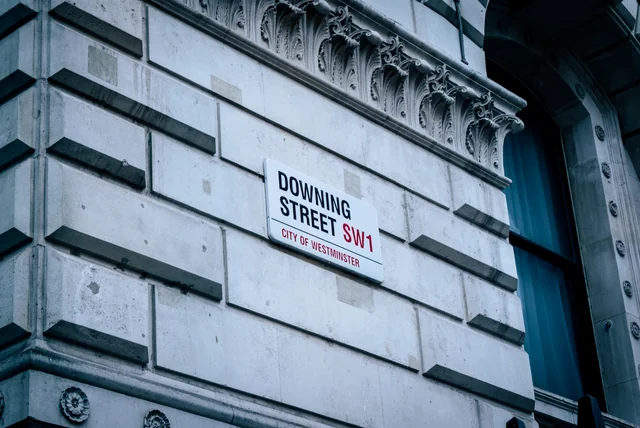
The retreat came in two stages. In January 2026 the government softened the scheme: digital ID would be voluntary, just one way to prove you could work, with a passport chip or e-visa record doing the job equally well. Then politics finished it off. Andy Burnham became Prime Minister in July 2026 and, within days of arriving in Downing Street, confirmed the scheme was dead — the estimated £1.8 billion cost redirected to cutting household electricity bills instead. It echoed the Blair-era identity cards, dismantled after the 2010 change of government. One piece survived the cull, though: the digital driving licence carries on, sitting alongside everyday DVLA services like the one that lets you renew your driving licence online.
GOV.UK One Login: The Sign-In That Is Real

While the BritCard row filled the headlines, a quieter system kept growing. GOV.UK One Login is a single sign-in — email address, password, two-step security code — that now opens over 200 government services. Since 9 February 2026, anyone new to HMRC uses it instead of setting up a Government Gateway account, while existing Gateway IDs carry on working until HMRC moves people across, from 2027 for individuals and by 2030 for businesses and agents. Proving who you are takes one of three routes: the One Login app with a passport or photocard licence, security questions online, or a visit to a Post Office. It’s a login, not an identity card — more on that in GOV.UK One Login explained. Callum set his up in about ten minutes.
GOV.UK Wallet and the Digital Driving Licence

Inside that same One Login app sits GOV.UK Wallet, the closest thing Britain actually has to digital ID in your pocket. The first document it held was the HM Armed Forces Veteran Card, and the digital driving licence is following: testing began with government staff in December 2025, a public pilot widened in February 2026, and the rollout has continued through the year. Your documents are stored locally on your phone rather than in one giant database, and you decide what gets shared and with whom. Nothing is being taken away either — the official GOV.UK Wallet guidance calls it entirely optional, and plastic photocards stay valid until at least 2030. Your penalty points still live on your DVLA record, which you can see when you check your driving licence points online.
Digital ID and Your Right to Work

So what was Callum’s bar actually asking for? Every UK employer must confirm a new starter’s right to work, and that check has largely moved online. A British or Irish citizen with a passport, current or recently expired, can complete a digital identity check: a certified provider’s app photographs the passport, matches it to a quick face scan, and confirms the result in minutes. People with UK immigration status instead prove their right to work online with a share code from their UKVI account. Paper routes remain on the official GOV.UK right to work page, and an employer cannot reject you for choosing any lawful method. Callum scanned his passport on the sofa during half-time. No BritCard, no card of any kind — just a five-minute check for one specific purpose.
The Companies Allowed to Check Who You Are
The app that checked Callum’s passport belonged to a private firm, which sounds alarming until you see the rulebook behind it. These companies are overseen by the Office for Digital Identities and Attributes, a government body inside the science department, and must appear on the statutory digital verification services register — 46 providers offering 64 certified services as of July 2026. Standards tightened again this month: a new 1.0 trust framework under the Data (Use and Access) Act 2025 came into force on 1 September 2026, with a UK CertifID trust mark for certified firms. The practical lesson is simple. Asked to verify your identity for a job or a flat? Look the firm up on the GOV.UK register first, with the same caution you’d use to check if a website is legit before paying it.
What UK Digital ID Is Not

Now for the myth-busting Steve needed. Digital ID in the UK is not compulsory: no law requires you to hold one, and access to public services does not depend on it. It is not a physical card — Britain has had no national identity card since the last scheme was scrapped in the early 2010s. Nor is it one big system. The wallet keeps documents on your own phone, One Login is just a sign-in, and private checking apps handle single tasks like job checks. It isn’t the NHS login either; health services run their own separate sign-in — the difference between the NHS App and NHS login is a story of its own. Even One Login has gaps, Universal Credit among them.
The Privacy Question
None of this means the critics went home. Campaigners argued the scrapped scheme risked mass surveillance, and they still question what remains: centralised identity data attracts hackers, the Data (Use and Access) Act 2025 loosened some data-protection rules, and Britain’s record on big IT projects — the Horizon scandal looms large — hardly inspires blind trust. Set against that are real safeguards. Wallet documents sit on your handset, not a national database; nothing is shared without your say-so; checking firms must pass certification to stay on the register; and One Login protects accounts with security codes that expire after 15 minutes, plus support for passkeys. Understanding that layer matters more than any card ever did — our guide to two-factor authentication explained shows why. The argument is far from settled.
Where This Leaves You
Callum poured his first pint the following Friday; Steve conceded the app was painless. That’s the honest picture of UK digital ID in September 2026: a scrapped card, a real sign-in, an optional wallet, and regulated checks for specific moments like starting a job. Nothing on that list requires action from you today. What helps is knowing which requests are genuine — so next time an employer, letting agent or till asks you to prove something digitally, you’ll recognise exactly which of the four things they mean.
Frequently Asked Questions
What is the UK digital ID?
It’s an umbrella term covering GOV.UK One Login, the GOV.UK Wallet with its digital driving licence, and certified private ID-check apps — not one single national identity card.
Has the UK digital ID scheme been scrapped?
Yes. The mandatory BritCard scheme announced in September 2025 was scrapped in July 2026 by Prime Minister Andy Burnham, after a petition of almost 3 million signatures.
Is digital ID mandatory in the UK?
No. Holding a digital ID is voluntary, and access to public services doesn’t depend on it. Right to work checks can still be done with a passport or share code.
Can I get a digital driving licence yet?
It’s rolling out through the GOV.UK Wallet during 2026 after a February pilot. Physical photocard licences remain valid and accepted until at least 2030.
Is GOV.UK One Login the same as digital ID?
Not quite. One Login is a sign-in for over 200 government services. It proves who you are to government websites but isn’t an identity card you carry or show.
Disclaimer: This article is general information, not legal or financial advice. Digital identity policy moves quickly and may change after publication; always check GOV.UK for the current rules. Details correct as of September 2026.