
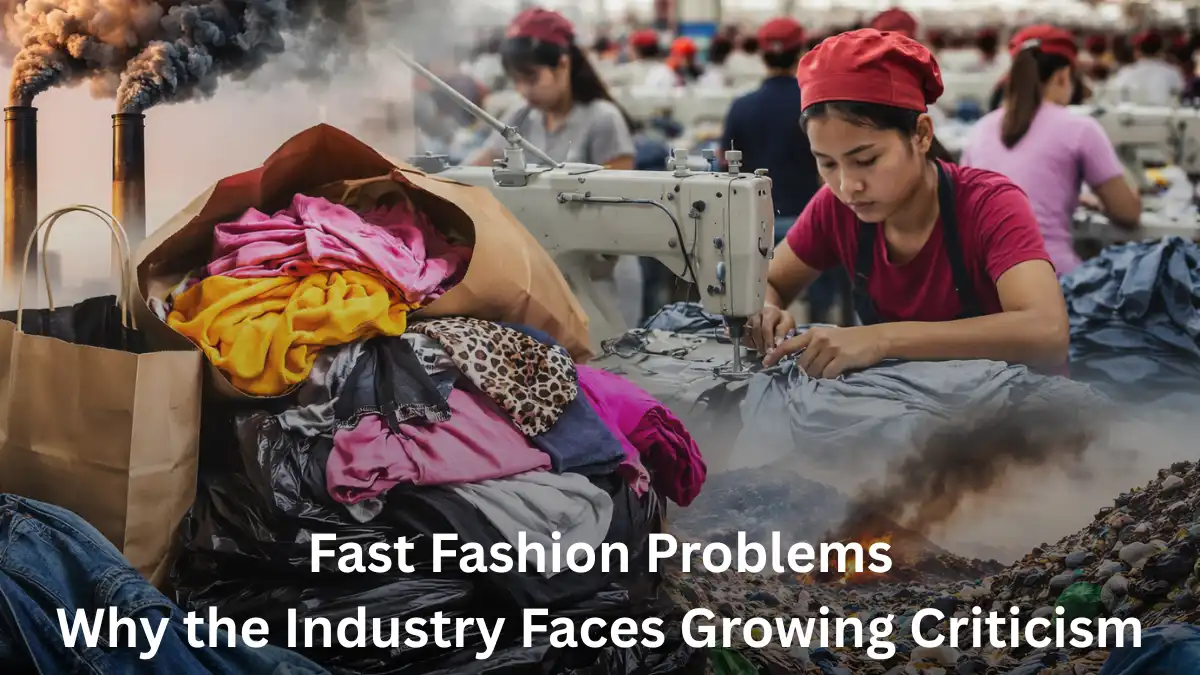
Fast fashion has become a major part of modern life. It allows people to buy trendy clothes at very low prices. New styles appear quickly, and shopping has become easier than ever. However, behind this convenience, there are many serious problems that people are starting to notice.
From environmental damage to poor working conditions, fast fashion has a wide impact on the world. In this article, we will explain the main fast fashion problems in simple language so you can clearly understand why this industry is facing growing criticism.
What Is Fast Fashion?
Fast fashion is a system where clothing brands produce large amounts of clothes very quickly. These clothes are based on the latest trends and are sold at cheap prices. This makes it easy for people to buy new outfits often.
The main goal of fast fashion is speed and low cost. Instead of focusing on quality, brands focus on making clothes quickly and selling them fast. As a result, many items are not made to last long.
Trends change very quickly in this system. What is popular today may go out of style in a few weeks. This encourages people to keep buying new clothes again and again.
If you want to understand how trends influence what people wear, you can explore different clothing styles and see how fashion keeps evolving over time.
While fast fashion may seem fun and affordable, it creates many hidden problems that affect the environment, workers, and society.
Environmental Impact of Fast Fashion
The environmental impact of fast fashion is one of the biggest concerns today. The industry uses large amounts of natural resources and creates pollution at every stage of production.
According to Earth.org, the fashion industry is responsible for around 10% of global carbon emissions. This makes it one of the largest polluting industries in the world.
Clothing production requires water, energy, and chemicals. These processes damage ecosystems and contribute to climate change.
- Huge amounts of water are used to grow cotton and produce fabrics.
- Textile dyeing releases toxic chemicals into rivers and oceans.
- Synthetic fabrics like polyester release microplastics into water.
- Factories produce greenhouse gases that increase global warming.
Another issue is the use of synthetic materials. These materials are made from fossil fuels, which increases pollution and dependence on non-renewable resources.
The environmental fashion impact is not limited to production. Washing and disposing of clothes also harm the planet. Microplastics released during washing enter oceans and affect marine life.
Overall, fast fashion puts heavy pressure on the environment. It uses more resources than necessary and creates pollution that affects both nature and human health.
Fashion Waste Problems and Landfills
Fast fashion has created a serious waste problem across the world. Because clothes are cheap and trends change quickly, people often throw away items after wearing them only a few times.
According to WWF, clothing production not only increases waste but also harms biodiversity and natural resources.
Every year, millions of tons of clothing end up in landfills. Most of these clothes are not recycled, which makes the problem worse.
- About 85% of textiles are thrown away each year.
- Many clothes are made from mixed materials, making recycling difficult.
- Unsold clothes are often burned or dumped.
- Cheap clothing loses value quickly and is easily discarded.
This waste creates pollution and takes up space in landfills. Some materials take many years to break down, releasing harmful substances into the soil and water.
Fast fashion also promotes a “throwaway culture.” People are encouraged to buy more and care less about what they own. This mindset increases fashion waste problems and makes sustainability harder to achieve.
Ethical and Labour Issues in Fast Fashion
Fast fashion is often linked to serious ethical issues, especially when it comes to workers. Many clothes are made in countries where labour is cheap, and regulations are weak.
According to Ethical Consumer, garment workers are often paid very low wages and work in unsafe conditions.
According to CHC International, human rights issues remain common in the fast fashion supply chain.
Workers face many challenges while producing clothes for global brands.
- Low wages that are not enough for basic needs.
- Long working hours with little rest or job security.
- Unsafe factories with poor safety measures.
- Child labour in some parts of the supply chain.
- Exposure to harmful chemicals during production.
These problems show that cheap clothing often comes at a high human cost. Many workers do not have the rights or protection they need.
Ethical fashion concerns are one of the main reasons why people are now questioning fast fashion and looking for better alternatives.
Overproduction and Overconsumption
Fast fashion depends on producing large amounts of clothing very quickly. This leads to overproduction, where more clothes are made than needed.
At the same time, consumers are encouraged to keep buying new items. This creates a cycle of overconsumption.
According to University of Pennsylvania, many clothes are designed to wear out quickly. This forces people to replace them often.
- Brands release new collections every week.
- Clothes are made cheaply and do not last long.
- Consumers feel pressure to follow trends.
- Low prices make it easy to buy more than needed.
This cycle increases demand for more production, which leads to more waste and pollution.
If you want to understand this system better, you can read more about fast fashion and how it drives modern shopping habits.
Overproduction and overconsumption are key fast fashion disadvantages. They create unnecessary waste and put pressure on the environment and resources.
Greenwashing and Sustainability Concerns
Many fast fashion brands claim to be sustainable or eco-friendly. However, these claims are often misleading. This is known as greenwashing.
According to Greenpeace, fast fashion cannot truly be sustainable because it relies on producing large volumes of clothing.
Even when brands promote recycling or “eco” collections, the overall impact remains high.
- Recycling systems are limited and cannot handle all waste.
- Synthetic fabrics still depend on fossil fuels.
- Marketing campaigns often hide the real environmental impact.
- High production levels cancel out small improvements.
True sustainability requires reducing production and consumption, not just improving small parts of the process.
If you are looking for better options, you can explore sustainable fashion, which focuses on ethical practices and long-lasting clothing.
Understanding sustainability helps people make better choices and avoid being misled by false claims.
Government Actions and Future Changes
As awareness of fast fashion problems grows, governments and organisations are starting to take action. New laws and policies aim to reduce waste and improve sustainability in the fashion industry.
According to European Parliament, the European Union is working on rules to promote recycling and reduce textile waste.
These changes are important, but they will take time to fully impact the industry.
- Textile waste collection systems are being introduced.
- There is a focus on reuse and recycling.
- Brands may face stricter environmental rules.
- Consumers are encouraged to adopt sustainable habits.
Learning about different types of fashion styles can also help people move away from fast-changing trends and make better long-term choices.
Government action, along with consumer awareness, can help reduce the negative effects of fast fashion over time.
Conclusion
Fast fashion offers cheap and trendy clothes, but it comes with many serious problems. It harms the environment, creates huge amounts of waste, and raises ethical concerns about workers.
The issues with fast fashion are complex, but understanding them is the first step toward change. By making better choices, such as buying less and choosing higher-quality items, people can reduce their impact.
The future of fashion depends on awareness, responsibility, and sustainable practices. Even small actions can help create a better and more ethical fashion industry.
FAQs
1. Why is fast fashion harmful to the environment?
Fast fashion harms the environment because it uses a lot of water, energy, and chemicals. It also creates pollution and waste, which affects air, water, and soil.
2. What are the main problems with fast fashion?
The main problems include pollution, waste, poor working conditions, overproduction, and misleading sustainability claims.
3. How does fast fashion affect workers?
Workers often face low wages, long working hours, and unsafe conditions. In some cases, child labour is also involved.
4. Why do fast fashion clothes not last long?
Fast fashion focuses on low cost and quick production, so clothes are made with cheaper materials that wear out quickly.
5. What is greenwashing in fast fashion?
Greenwashing is when brands claim to be eco-friendly but do not actually follow sustainable practices. It is often used as a marketing trick.
6. How can people reduce fast fashion problems?
People can buy fewer clothes, choose better quality items, support sustainable brands, and recycle or donate old clothes.
Author Bio
Editorial team UK Digital Life is a group of content writers who create simple and informative articles on fashion, lifestyle, and digital trends. Their goal is to help readers understand complex topics in an easy and clear way.
Disclaimer
This content is for general informational purposes only. While we try to provide accurate and updated information, we do not guarantee completeness. Readers should do their own research before making decisions related to fashion or sustainability.