
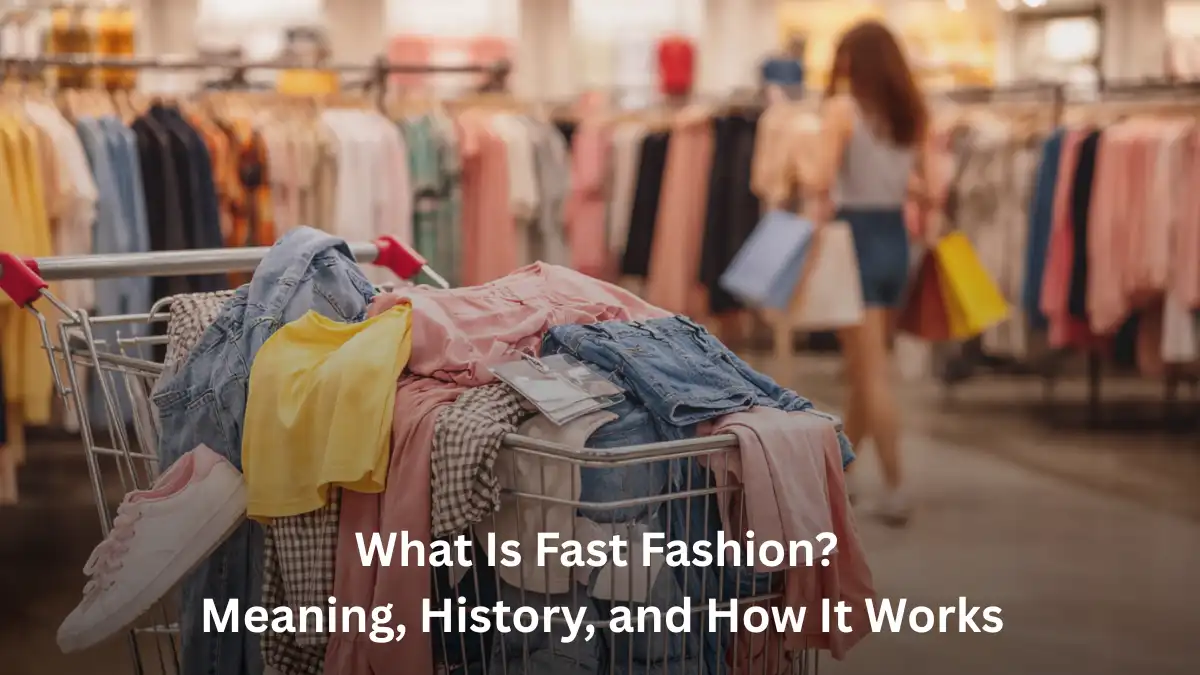
Fast fashion is a common term in today’s clothing industry, but many people do not fully understand what it means. You may see new clothes in stores every week and wonder how brands produce them so quickly. This is where fast fashion comes in.
Fast fashion has changed how people buy and wear clothes. It makes trendy clothing affordable and easy to access. However, it also raises questions about quality, sustainability, and working conditions.
In this article, you will learn what fast fashion is, its meaning and definition, how it started, how it works, and its impact on people and the environment. By the end, you will have a clear and simple understanding of the fast fashion industry.
What Is Fast Fashion?
Fast fashion is a way of making and selling clothes very quickly. Brands create new designs based on the latest trends and bring them to stores in a short time. These clothes are usually cheap, so people can buy them easily and often.
The main idea behind fast fashion is speed. Instead of waiting months for new collections, brands release new styles every week or even every few days. This keeps customers interested and encourages them to shop more often.
In simple words, fast fashion means trendy clothes that are made quickly and sold at low prices. If you want a deeper understanding, this fast fashion explanation shows how the system works in real life.
Fast fashion has changed how people shop for clothes. Today, fashion is no longer about long-lasting items. Instead, it is about staying updated with new trends all the time.
Fast Fashion Meaning and Definition
The fast fashion meaning is about producing clothes quickly and cheaply to match current trends. It focuses on making fashionable items available to everyone at affordable prices.
The fast fashion definition can be explained as a business model that depends on speed, low cost, and high demand. Brands do not focus on long-term use. Instead, they create clothes that are worn for a short time and then replaced.
According to Wikipedia, fast fashion involves quickly producing low-cost clothing that follows the latest trends.
Key points of fast fashion include:
- Clothes are made very quickly
- Prices are kept low
- New styles appear frequently
- Customers are encouraged to buy often
This model makes fashion more accessible, but it also leads to overconsumption because people keep buying new items instead of using what they already have.
History of Fast Fashion
The history of fast fashion started with the rise of industrial production. In the past, clothes were handmade and expensive. People owned fewer clothes and used them for many years. Fashion trends also changed slowly.
With the Industrial Revolution, machines made it possible to produce clothes faster. However, fast fashion as we know it today became popular in the late 20th century. Brands began to focus on quick production and lower prices.
According to Britannica, fast fashion grew rapidly in the 1990s and 2000s when companies started shortening production times.
Some important changes that shaped fast fashion include:
- Use of machines for mass production
- Global supply chains for cheaper labour
- Faster transportation and shipping
- Growth of online shopping
Today, fast fashion is a global industry that produces millions of garments every year and continues to grow.
How Fast Fashion Works
The fast fashion business model is based on copying trends and producing clothes quickly. Brands watch fashion shows, celebrities, and social media to find out what is popular. They then create similar designs and bring them to the market in a short time.
According to McKinsey, some brands can turn a design into a finished product in just a few weeks. This shows how fast the process really is.
Here is how fast fashion usually works:
- Trends are identified from runways and social media
- Designs are created quickly
- Clothes are produced in large factories
- Items are shipped to stores or sold online
- New collections are released frequently
This fast process allows brands to stay ahead of trends and keep customers coming back for new styles again and again.
Key Features of Fast Fashion
Fast fashion has several key features that make it different from traditional fashion. These features focus on speed, cost, and constant change. They help brands produce and sell clothes quickly while keeping prices low.
One of the biggest features is rapid production. Clothes move from design to store in a very short time. Another important feature is affordability, which allows more people to follow fashion trends.
Main features of fast fashion include:
- Rapid production and delivery
- Low prices and frequent discounts
- Trend-based designs inspired by current styles
- Short life cycle of clothing items
- High volume production to meet demand
Modern types of fashion styles often change quickly because of fast fashion, which constantly introduces new trends into the market.
Modern Clothing Production Trends
Modern clothing production has become faster and more advanced due to technology and globalisation. Brands now use data and software to understand what customers want and produce clothes quickly.
Instead of releasing clothes only during seasons, many companies now follow micro-seasons. This means they launch new collections every week or even every day.
According to TFashion, some fast fashion brands release hundreds of new designs every week, which shows how fast the industry operates.
Key trends in modern clothing production include:
- Use of digital tools for quick design
- Data-driven production based on demand
- Global manufacturing networks
- Short product life cycles
This system increases speed and efficiency, but it also leads to more waste and environmental concerns.
Fast Fashion Industry Meaning
The fast fashion industry meaning refers to a part of the fashion industry that focuses on producing large amounts of trendy clothing quickly and cheaply. It is driven by customer demand for affordable and fashionable items.
This industry depends on global supply chains and low-cost production methods. It also focuses on constant innovation to keep up with changing trends and customer preferences.
Main characteristics of the fast fashion industry include:
- High production volume
- Fast turnaround times
- Affordable pricing strategies
- Regular introduction of new products
Many popular clothing styles today are influenced by fast fashion brands that quickly bring new designs into the market.
Environmental Impact of Fast Fashion
Fast fashion has a major impact on the environment because it involves large-scale production and consumption. Making clothes requires water, energy, and chemicals, which can harm the environment.
According to University of Pennsylvania, the fashion industry is one of the largest polluters in the world.
Environmental problems caused by fast fashion include:
- Large amounts of waste in landfills
- Water pollution from dyes and chemicals
- Microplastics from synthetic fabrics
- Overuse of natural resources
Because of these issues, more people are now exploring sustainable fashion as a better and more responsible option.
Social and Human Rights Issues
Fast fashion also affects workers who make the clothes. Many factories are located in developing countries where labour is cheaper. Workers often face low wages and difficult working conditions.
According to UNSW Human Rights, the industry raises serious concerns about worker safety and human rights.
Common social issues include:
- Low wages for workers
- Unsafe working environments
- Lack of proper labour rights
- Poor transparency in supply chains
These problems have made many people more aware of how their clothes are made and where they come from.
Why Fast Fashion Is So Popular
Fast fashion is popular because it makes stylish clothing affordable and easy to access. People can buy trendy outfits without spending a lot of money, which makes it very attractive.
According to The Good Trade, fast fashion encourages people to buy more and wear clothes for a shorter period.
Reasons why fast fashion is popular include:
- Affordable prices for everyone
- New styles available frequently
- Convenient online shopping options
- Strong influence of social media trends
Many people enjoy trying different looks and experimenting with outfit aesthetics, which fast fashion makes easy and budget-friendly.
Final Thoughts
Fast fashion is an important part of the modern fashion industry. It allows people to buy trendy clothes at low prices and stay updated with new styles. However, it also creates serious environmental and social challenges.
By understanding what fast fashion is, its meaning, and how it works, you can make better choices when shopping. Choosing quality clothing and supporting sustainable brands can help reduce the negative impact of fast fashion.
FAQs
1. What is fast fashion in simple words?
Fast fashion means making trendy clothes quickly and selling them at low prices so people can buy them often.
2. Why is fast fashion so cheap?
Fast fashion is cheap because brands use low-cost materials, mass production, and cheaper labour to reduce costs.
3. Is fast fashion bad for the environment?
Yes, fast fashion creates waste, pollution, and uses a lot of natural resources, which harms the environment.
4. How does fast fashion affect workers?
Workers in fast fashion factories may face low wages, long hours, and unsafe working conditions.
5. What is the difference between fast fashion and sustainable fashion?
Fast fashion focuses on speed and low cost, while sustainable fashion focuses on quality, ethics, and protecting the environment.
6. How can I avoid fast fashion?
You can avoid fast fashion by buying fewer clothes, choosing quality items, supporting ethical brands, and reusing or recycling clothes.
Author Bio
Editorial Team UK Digital Life is a group of writers who create simple and helpful content on fashion, lifestyle, and trends. They focus on clear explanations and easy language so readers can understand topics quickly and make better everyday choices.
Disclaimer
This content is for informational purposes only. It provides general knowledge about fast fashion and its impact. Readers are encouraged to do their own research before making purchasing or lifestyle decisions. The views shared are not professional or legal advice.