
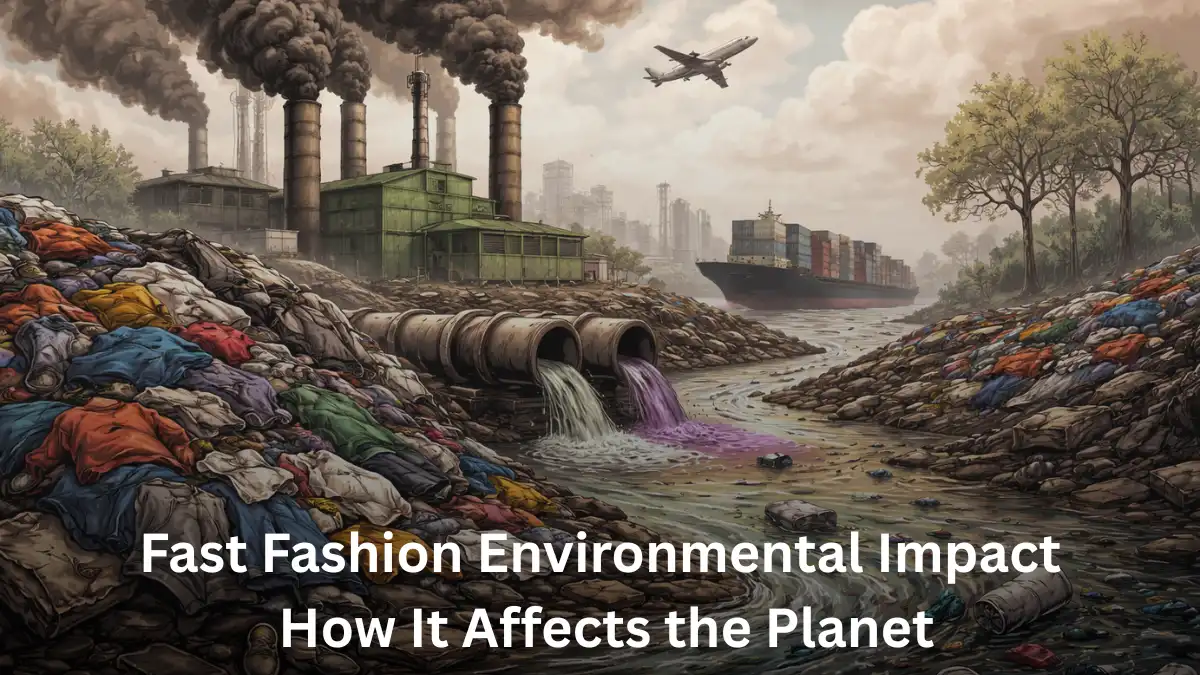

Fast fashion has made clothing cheaper and easier to buy than ever before. People can now follow trends without spending much money. But this convenience comes with a hidden cost. The fast fashion environmental impact is very serious and affects the planet in many ways. From pollution to waste, the damage is increasing every year.
In simple words, fast fashion is not just about clothes. It is about how those clothes are made, used, and thrown away. This entire process harms nature, uses too many resources, and creates long-term environmental problems.
What Is Fast Fashion?
Fast fashion is a system where clothing brands produce large amounts of trendy clothes very quickly and sell them at low prices. New designs are released often, sometimes every week. This encourages people to keep buying new clothes instead of using what they already have.
The main goal of fast fashion is speed and profit, not quality or sustainability. Clothes are often made with cheap materials and are not designed to last long. As a result, people wear them only a few times and then throw them away.
If you want a deeper understanding of how this system works, you can explore this detailed guide on fast fashion. It explains how brands operate and why this model has become so popular.
This fast cycle of buying and discarding clothes is the root cause of many environmental problems.
Fast Fashion Impact on Environment
The fast fashion impact on environment is very wide and affects almost every part of nature. It is not just one problem but a combination of many issues that together create serious damage.
Fast fashion affects water, air, soil, and even living creatures. It uses huge amounts of natural resources and produces large amounts of waste and pollution. The process starts from raw material production and continues until the clothes are thrown away.
- Uses large amounts of water and energy
- Creates pollution in rivers and oceans
- Produces greenhouse gases that cause climate change
- Generates huge amounts of textile waste
- Damages ecosystems and wildlife
According to UNEP, the fashion industry is responsible for around 8–10% of global carbon emissions, which shows how serious the problem is.
All these issues together make fast fashion one of the most harmful industries for the environment.
Clothing Waste Problem and Textile Waste Impact
The clothing waste problem is one of the biggest environmental problems of fast fashion. Because clothes are cheap and trends change quickly, people buy more than they need and throw away items very fast.
Most of these clothes are not reused or recycled. Instead, they end up in landfills or are burned. This creates long-term environmental damage because many fabrics do not break down easily.
According to Earth.org, around 92 million tonnes of textile waste are produced every year.
- Clothes are worn only a few times before disposal
- Synthetic fabrics can take hundreds of years to decompose
- Landfills are filling up quickly with textile waste
- Burning clothes releases harmful gases into the air
The textile waste impact is not just about space. It also pollutes the soil and air, making it harder for nature to recover.
Water Usage and Water Pollution
Water usage in fast fashion is extremely high. Large amounts of water are needed to grow raw materials like cotton and to process fabrics. This puts pressure on water resources, especially in countries where water is already limited.
Another major issue is water pollution. During the dyeing and finishing process, harmful chemicals are used. These chemicals often enter rivers and lakes without proper treatment.
According to World Bank, textile production is one of the largest sources of water pollution globally.
- Huge water consumption in cotton farming
- Toxic dyes and chemicals pollute water bodies
- Unsafe wastewater harms aquatic life
- Clean drinking water sources get contaminated
This shows how environmental clothing production directly affects both nature and human health.
Fast Fashion Pollution and Carbon Emissions
Fast fashion pollution includes air pollution, water pollution, and even microplastic pollution. The industry depends heavily on factories, transportation, and synthetic materials, all of which create pollution.
Carbon emissions are another major issue. Clothes are produced in large factories that use fossil fuels. Then they are transported across the world, adding more emissions.
- Factories release greenhouse gases into the air
- Shipping and transport increase carbon footprint
- Synthetic fabrics release microplastics during washing
- Air pollution affects human health and climate
According to National Geographic, clothing production has doubled since 2000, which has increased pollution significantly.
These emissions contribute to global warming and climate change, making fast fashion a major environmental concern.
Environmental Damage from Production and Materials
The environmental damage caused by fast fashion starts at the production stage. Raw materials like cotton require pesticides and fertilizers, which harm the soil and nearby water sources.
Factories also use large amounts of energy and chemicals. In many cases, waste from these factories is released directly into the environment without proper treatment.
- Pesticides damage soil quality and biodiversity
- Chemical waste pollutes rivers and land
- Energy use increases environmental impact
- Production often harms ecosystems in developing countries
Many clothes are made from synthetic materials like polyester, which are derived from fossil fuels. These materials are not biodegradable and add to long-term pollution.
All these factors make environmental clothing production a major issue in the fashion industry.
Fast Fashion Sustainability Issues
Fast fashion sustainability issues are deeply connected to how the industry operates. It focuses on producing more clothes quickly and cheaply, without thinking about long-term effects.
This model encourages overconsumption and waste. It also makes it difficult to create a sustainable system because the focus is always on speed and profit.
- Low-quality clothes that do not last long
- Very low recycling rates
- High use of natural resources
- Continuous pressure to buy new items
According to Good On You, many brands release new collections weekly, which increases unnecessary buying.
If you are looking for better choices, you can learn more about sustainable fashion and how it helps reduce environmental harm.
Recycling Challenges in Fast Fashion
Recycling clothes sounds like a good solution, but it is not easy. Many garments are made from mixed materials, which makes recycling difficult and expensive.
As a result, only a small percentage of clothing is actually recycled. Most items are either dumped in landfills or burned.
According to BBC Future, recycling is limited because of complex fabric structures and lack of proper technology.
- Mixed fabrics are hard to separate
- Recycling technology is still developing
- Large volumes of waste cannot be handled
- Second-hand markets are overloaded
This makes textile waste impact even more serious.
Better Alternatives and Smarter Choices
Even though fast fashion causes many problems, there are ways to reduce its impact. Small changes in our habits can make a big difference.
Instead of buying many cheap clothes, people can choose fewer and better-quality items. Understanding your style can also help you avoid unnecessary shopping.
You can explore different types of fashion styles to build a wardrobe that lasts longer. Knowing your personal clothing style can also help you make smarter choices.
- Buy less and choose quality over quantity
- Use clothes for a longer time
- Support eco-friendly brands
- Reuse, donate, or recycle clothing
These simple steps can help reduce the fast fashion environmental impact over time.
Final Thoughts
The fast fashion environmental impact is a serious global issue. It affects water, air, land, and wildlife. From pollution and waste to carbon emissions and resource use, the damage is widespread.
However, change is possible. By making better choices and supporting sustainable practices, we can reduce harm to the planet. The future of fashion depends on how we act today.
FAQs
1. What is the environmental impact of fast fashion?
Fast fashion harms the environment by creating pollution, using large amounts of water, producing textile waste, and increasing carbon emissions that contribute to climate change.
2. Why is fast fashion bad for the planet?
Fast fashion encourages overproduction and overconsumption. This leads to waste, pollution, and the use of harmful chemicals that damage ecosystems and natural resources.
3. How does fast fashion affect water resources?
It uses huge amounts of water for cotton farming and fabric production. It also pollutes rivers and lakes with toxic dyes and chemicals.
4. What happens to clothes after they are thrown away?
Most clothes end up in landfills or are burned. Synthetic fabrics can take hundreds of years to decompose and release harmful gases when burned.
5. Can fast fashion be sustainable?
Fast fashion is not fully sustainable due to its business model. However, brands can reduce harm by using eco-friendly materials and improving production methods.
6. How can consumers reduce fast fashion impact?
People can buy fewer clothes, choose high-quality items, reuse or donate clothes, and support sustainable fashion brands.
Author Bio
The Editorial Team at UK Digital Life creates clear and informative content on modern lifestyle, fashion, and technology. They focus on simplifying complex topics to help readers make better everyday decisions.
Disclaimer
This content is for informational purposes only. While we aim to provide accurate and up-to-date information, environmental data and statistics may change over time. Readers are encouraged to verify details from official sources before making decisions based on this content.
