
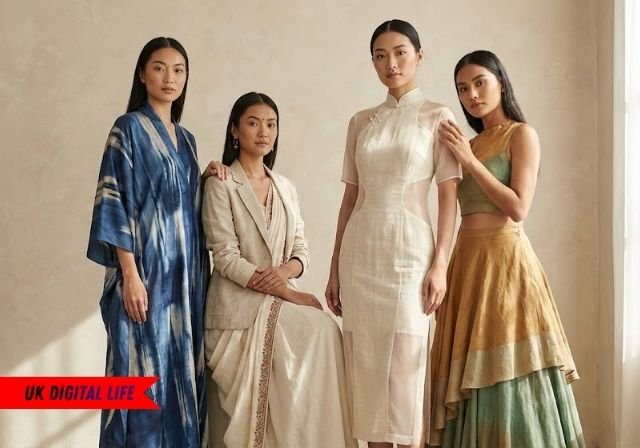

Asian style dresses come from different cultures across Asia. They are known for comfort, beauty, and meaning. These dresses use special fabrics, colours, and designs that reflect tradition and daily life. Today, people wear them for both special events and everyday use.
This article explains what Asian style dresses are, their types, fabrics, and designs. It also shows how to wear and choose them easily. The guide is simple and helpful for anyone who wants to understand Asian style dresses.
What Is an Asian Style Dress?
An Asian style dress is clothing influenced by Asian cultural heritage, textile traditions, and regional design philosophies. These dresses often reflect values such as balance, modesty, elegance, and harmony with nature. Historically, designs were shaped by climate, lifestyle, and cultural beliefs, which is why styles vary widely across regions.
In modern fashion, Asian style dresses may:
- Follow traditional construction methods
- Use traditional patterns with modern silhouettes
- Combine Asian textiles with contemporary tailoring
This flexibility has made them widely accepted in global fashion.
Types of Asian Style Dresses
Traditional Asian Dresses
Traditional Asian dresses are designed with cultural meaning and purpose. Many patterns, colours, and shapes hold symbolic value. These dresses are commonly worn for ceremonies, festivals, and formal gatherings.
Key characteristics:
- Structured or flowing silhouettes based on regional customs
- Symbolic motifs representing nature, prosperity, or celebration
- Craft-based techniques such as weaving, embroidery, and dyeing
- Fabrics chosen for durability and climate suitability
Traditional dresses focus on craftsmanship rather than fast-changing trends.
Modern Asian-Inspired Dresses
Modern Asian-inspired dresses reinterpret traditional elements for daily life. Designers often simplify patterns, reduce layering, and adjust fits for comfort and movement.
Common features:
- Minimal embroidery or printed motifs
- Shorter lengths or relaxed fits
- Easy-to-care fabrics
- Versatility for casual, work, or semi-formal use
These dresses appeal to people who appreciate cultural style without heavy ornamentation.
Asian Style Dresses by Region
East Asian Style Dresses
East Asian fashion often values structure, symmetry, and clean design. Dresses from this region tend to emphasise form and detail rather than bold decoration.
Notable traits:
- Straight or tailored cuts
- High necklines or wrap closures
- Muted or neutral colour palettes
- Smooth fabrics with a polished finish
The focus is on elegance through simplicity.
South Asian Style Dresses
South Asian dresses are known for visual richness and expressive design. Clothing often reflects celebration, status, and artistry.
Key elements include:
- Layered garments or flowing shapes
- Intricate embroidery, beadwork, or prints
- Bright colours mixed with metallic tones
- Fabrics chosen for movement and drape
These dresses are often designed to stand out during special occasions.
Southeast Asian Style Dresses
Southeast Asian style dresses prioritise comfort and breathability. Designs are closely linked to natural surroundings and traditional lifestyles.
Main features:
- Lightweight and airy fabrics
- Simple construction with elegant detailing
- Nature-inspired colours and patterns
- Practical designs suitable for long wear
These dresses balance beauty with everyday practicality.
Popular Designs and Patterns in Asian Style Dresses
Asian style dresses often use designs that carry meaning rather than decoration alone.
Common design influences:
- Flowers representing growth and beauty
- Animals symbolising strength or harmony
- Geometric patterns reflecting balance and order
- Handcrafted textures that show artisan skill
Modern versions may simplify these designs while preserving their essence.
Fabrics Used in Asian Style Dresses
Fabric choice plays a major role in comfort, appearance, and durability.
Silk and Satin
- Smooth texture and natural shine
- Used mainly for formal and ceremonial dresses
- Drapes well but requires careful handling
Cotton and Linen
- Breathable and skin-friendly
- Suitable for daily wear and warm climates
- Easy to maintain and long-lasting
Chiffon and Georgette
- Lightweight and flowy
- Ideal for layered designs and evening wear
- Often paired with inner linings for comfort
Choosing the right fabric depends on climate, occasion, and personal comfort.
Asian Style Dresses for Different Occasions
Everyday and Casual Wear
Daily-wear Asian style dresses focus on ease of movement and low maintenance. Simple prints, neutral colours, and breathable fabrics are preferred.
Festivals and Cultural Events
These dresses usually feature richer colours, traditional motifs, and decorative elements. Accessories are often used to enhance cultural identity rather than follow trends.
Weddings and Formal Events
Formal Asian style dresses highlight craftsmanship and luxury. Attention is given to fabric quality, detailing, and overall balance rather than excess decoration.
How to Style an Asian Style Dress
Effective styling focuses on harmony rather than excess.
Practical tips:
- Match accessories to the dress’s level of detail
- Choose footwear that complements the silhouette
- Keep hairstyles simple for modern looks
- Layer lightly without hiding design details
Good styling allows the dress to remain the focal point.
Traditional vs Modern Asian Style Dress
Traditional dresses preserve cultural identity and craftsmanship. Modern dresses prioritise comfort, adaptability, and everyday use.
Neither is better than the other. The right choice depends on:
- Occasion
- Comfort needs
- Personal style
Many wardrobes successfully include both.
How to Choose the Right Asian Style Dress
Before choosing a dress, consider:
- Fit and ease of movement
- Fabric comfort for long wear
- Occasion and setting
- Colour suitability
- Maintenance requirements
Trying different styles helps identify what works best.
Care and Maintenance of Asian Style Dresses
Proper care extends the life of the dress.
Best practices:
- Gentle washing for delicate fabrics
- Avoid harsh detergents
- Store folded or hung properly
- Keep away from prolonged moisture
Good maintenance preserves fabric texture and colour.
FAQs
Are Asian style dresses only for special occasions?
No. Many modern designs are made for daily wear.
Do Asian style dresses follow fashion trends?
They evolve slowly, focusing more on timeless design than fast trends.
Can Asian style dresses be styled in a modern way?
Yes. Simple accessories and clean footwear create a modern look easily.
Conclusion
Asian style dresses combine tradition, craftsmanship, and modern adaptability. Their designs are shaped by culture, climate, and history, yet they continue to evolve with current fashion needs. Whether worn casually or formally, these dresses remain relevant because they offer comfort, meaning, and lasting style.
