
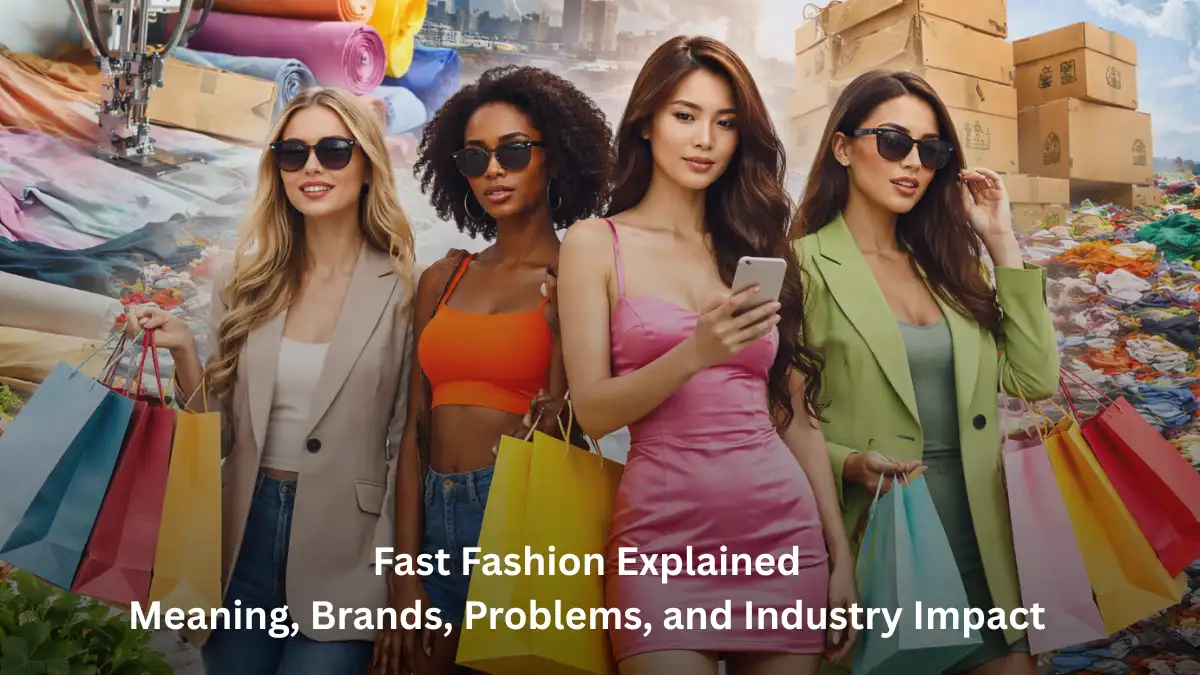
The fashion world has changed a lot in the past few decades. Today, clothing trends move faster than ever before. New designs appear online, and similar styles reach stores within a few weeks. This rapid system is known as fast fashion.
The fast fashion industry focuses on producing large amounts of trendy clothing at low prices. It allows people to buy stylish outfits without spending much money. However, this model has also created many concerns related to waste, environmental damage, and labor conditions.
In this guide, we explain the fast fashion meaning, how the industry works, popular fast fashion brands, the main problems linked to it, and its overall impact on the global fashion industry.
Fast Fashion Meaning
Fast fashion is a clothing production model that focuses on creating trendy clothes quickly and selling them at affordable prices. In simple terms, it means producing clothing at high speed so customers can buy the latest fashion trends almost immediately after they appear.
In the past, fashion collections were released only a few times each year. Designers created seasonal collections for spring, summer, autumn, and winter. Fast fashion changed this system completely. Instead of a few releases each year, brands now launch new styles almost every week.
The goal of fast fashion is simple: move fashion ideas from design to store shelves as quickly as possible. Companies closely follow runway shows, celebrity outfits, and social media trends. They then create similar designs and produce them quickly using large-scale manufacturing.
This system relies on:
- Fast clothing design and development
- Mass production clothing factories
- Low-cost materials and manufacturing
- Quick transportation and distribution
- Frequent release of new fashion collections
Because of this process, clothing has become cheaper and more accessible. However, the speed of production also encourages people to buy more clothes and replace them more often.
The Rise of the Fast Fashion Industry
The fast fashion industry began growing rapidly in the late twentieth century. Advances in manufacturing technology, global trade, and supply chain management allowed clothing companies to produce garments faster and at lower cost than ever before.
As international manufacturing expanded, many brands started producing clothing in countries where labor costs were lower. This helped companies reduce production expenses and sell clothes at very affordable prices.
Retailers also changed the way clothing was designed and sold. Instead of planning collections months in advance, companies began responding quickly to market trends. If a new style became popular, brands could design and produce a similar item within a few weeks.
Several factors helped the fast fashion industry grow:
- Global manufacturing networks
- Improved textile technology
- Faster shipping and logistics systems
- The growth of shopping malls and online retail
- Increased demand for affordable fashion
This shift greatly increased the amount of clothing produced worldwide. As a result, fashion consumption trends changed significantly. People now buy more clothing than previous generations and update their wardrobes more frequently.
Fashion has always evolved through different eras. For example, styles like 15th century fashion reflected cultural traditions and craftsmanship that developed slowly over time. In contrast, modern fast fashion focuses on speed and constant change.
How the Fast Fashion Business Model Works
The fast fashion business model is designed to produce clothing quickly while keeping costs low. Companies use efficient systems that allow them to move from design to production in a very short time.
Many fast fashion brands monitor fashion shows, celebrity outfits, and online trends. Designers then create similar styles that can be produced quickly using large factories.
Manufacturing usually takes place in countries where production costs are lower. Large factories produce clothing in huge quantities, which helps reduce the price of each item.
The main elements of the fast fashion business model include:
- Trend tracking: Brands watch social media, influencers, and fashion events to identify popular styles.
- Rapid design: Designers create new products quickly based on current trends.
- Mass production: Factories produce large quantities of clothing using automated systems.
- Quick distribution: Efficient logistics move products from factories to stores rapidly.
- Frequent product releases: Stores regularly introduce new collections to encourage repeat shopping.
This strategy creates a sense of urgency for customers. When shoppers see a trendy item at a low price, they often buy it quickly because they know it may disappear from stores soon.
Popular Fast Fashion Brands
Many global companies operate under the fast fashion model. These brands focus on offering trendy clothing at affordable prices and releasing new designs frequently.
Fast fashion brands use large production networks and efficient supply chains to produce clothing quickly. Their collections change often, sometimes every few weeks, which keeps customers interested and encourages repeat visits to stores or websites.
Some of the most well-known fast fashion brands include:
- Zara – known for quickly turning runway trends into store collections.
- H&M – offers a wide range of affordable clothing for men, women, and children.
- Shein – a major online retailer that releases thousands of new designs regularly.
- Primark – famous for extremely low clothing prices.
- ASOS – a popular online fashion platform targeting younger shoppers.
- Forever 21 – known for trendy clothing aimed at teenagers and young adults.
- Fashion Nova – heavily influenced by social media and celebrity fashion.
- Uniqlo – focuses on simple everyday clothing produced at scale.
These companies have shaped modern fashion shopping by making trendy clothing widely available and affordable to millions of people around the world.
Fast Fashion Examples in Everyday Shopping
Fast fashion can be seen in many common shopping experiences today. Clothing brands constantly introduce new styles to match current trends and consumer demand.
For example, if a certain outfit becomes popular on social media, fashion companies may quickly create similar designs and release them in stores within a short period of time.
Some common fast fashion examples include:
- Retail stores releasing new clothing collections every few weeks
- Online brands adding hundreds of new items each week
- Low-cost clothing designed for short-term use
- Trend-based outfits inspired by celebrities or influencers
- Large clothing sales encouraging frequent purchases
Fast fashion encourages people to experiment with new styles regularly. However, many of these clothes are worn only a few times before being replaced by newer trends.
Earlier fashion eras focused more on durability and long-term style. For instance, classic pieces like 1940s style dresses were designed to last for many years rather than a single season.
Fast Fashion Problems
While fast fashion has made clothing more affordable, it has also created many serious problems. These issues affect workers, the environment, and the overall sustainability of the fashion industry.
One major problem is overproduction. Because companies produce clothing very quickly and in large quantities, many garments are never sold or are discarded after a short period of use.
Another concern involves working conditions in garment factories. Many fast fashion items are produced in developing countries where labor regulations may be weaker. Workers may face long hours, low wages, and unsafe environments.
Key fast fashion problems include:
- Large amounts of textile waste
- Poor working conditions in some factories
- Low wages for garment workers
- Short product life cycles
- Encouragement of excessive consumer spending
These issues have led many people to question whether fast fashion is sustainable in the long term.
Environmental Impact of Fast Fashion
The environmental impact of fast fashion is one of the biggest concerns surrounding the industry. Producing large quantities of clothing requires significant natural resources, including water, energy, and raw materials.
Textile production often involves chemical dyes and treatments that can pollute water systems. When factories release untreated waste into rivers or lakes, it can harm local ecosystems and communities.
Another environmental problem is clothing waste. Because fast fashion items are inexpensive and trend-driven, many people discard them after only a few uses.
Major environmental issues caused by fast fashion include:
- Large amounts of water used in textile production
- Pollution from chemical dyes and fabric treatments
- Microplastic pollution from synthetic fabrics
- Growing textile waste in landfills
- Carbon emissions from manufacturing and shipping
These environmental challenges have encouraged discussions about sustainable fashion and responsible clothing production.
How Fast Fashion Affects the Global Fashion Industry
The fast fashion model has dramatically changed how the global fashion industry operates. In the past, clothing brands focused on quality, craftsmanship, and seasonal collections. Today, speed and affordability play a much bigger role.
Retailers must now respond quickly to changing trends. If a brand cannot release new styles regularly, it may struggle to compete with fast fashion companies that introduce new products constantly.
This shift has influenced many aspects of the industry, including:
- Faster product development cycles
- Higher clothing production volumes
- Shorter fashion trend lifespans
- Increased competition among clothing brands
- Greater influence of social media on fashion trends
At the same time, many designers and consumers are now exploring alternatives to fast fashion. Some people prefer timeless styles that remain fashionable for many years, such as classic Italian style women’s fashion or vintage pieces like 1920 fashion shoes.
This growing interest in durable and classic clothing may help encourage more sustainable practices in the future.
Final Thoughts
Fast fashion has transformed the clothing industry by making trendy styles widely available at low prices. The system allows companies to design, produce, and sell clothing faster than ever before.
However, this rapid production model also raises concerns about environmental damage, waste, and labor conditions. As awareness grows, more consumers are beginning to think carefully about how their clothing choices affect the world.
Understanding the fast fashion industry helps shoppers make better decisions and encourages a more responsible approach to fashion consumption.
FAQs
1. What is fast fashion in simple terms?
Fast fashion refers to clothing that is designed, produced, and sold very quickly at low prices. Brands follow the latest trends and release new styles frequently so customers can buy fashionable clothes soon after they appear online or on runways.
2. Why is fast fashion so popular?
Fast fashion is popular because it offers trendy clothing at affordable prices. Many brands release new collections every few weeks, allowing shoppers to update their wardrobe regularly without spending a lot of money.
3. What are the main problems with fast fashion?
The main problems include environmental pollution, large amounts of textile waste, and concerns about factory working conditions. Fast production cycles also encourage people to buy more clothes than they need.
4. Which brands are considered fast fashion brands?
Common fast fashion brands include Zara, H&M, Shein, Primark, ASOS, Forever 21, Fashion Nova, and Uniqlo. These companies focus on quickly producing trendy clothing and selling it at affordable prices.
5. How does fast fashion affect the environment?
Fast fashion affects the environment through water usage, chemical pollution, textile waste, and carbon emissions from manufacturing and shipping. Many garments are discarded after only a few uses.
6. Is fast fashion changing the fashion industry?
Yes, fast fashion has changed the industry by increasing production speed and shortening fashion cycles. Many brands now release new designs more often to stay competitive and meet changing consumer trends.
Author Bio
The Editorial Team at UK Digital Life covers topics related to technology, digital trends, lifestyle, fashion, and home design. Our goal is to provide clear, helpful, and easy-to-understand guides that help readers stay informed about modern trends and everyday innovations.
Disclaimer
The information in this article is for educational and informational purposes only. While we aim to provide accurate and up-to-date content, fashion trends, brand practices, and industry data may change over time. Readers should conduct their own research before making purchasing decisions.
1 thought on “Fast Fashion Explained: Meaning, Brands, Problems, and Industry Impact”