
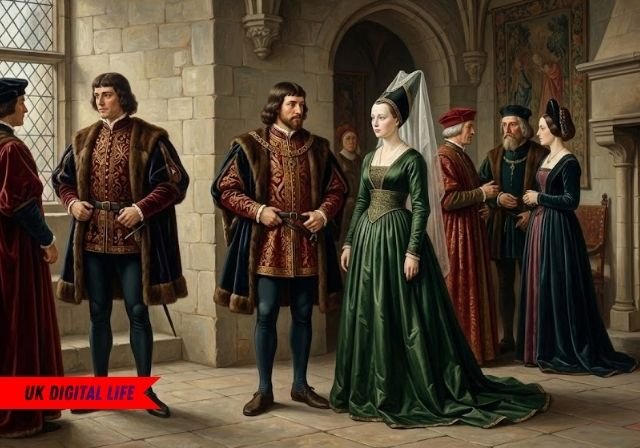
15th century fashion covers European clothing styles from 1400 to 1500. This century is important because it marks a major shift in fashion history. Clothing changed from loose medieval garments to more shaped, fitted, and structured designs. People began to care more about appearance, detail, and personal style.
Fashion during this time was strongly linked to social class, wealth, gender, and region. What a person wore clearly showed who they were, where they belonged, and how powerful they were. This period also laid the groundwork for Renaissance fashion, which later influenced modern clothing.
Historical Background and Cultural Influence
The 15th century was a time of political power, trade growth, and cultural change in Europe. Powerful courts in Burgundy, France, Italy, and England played a major role in setting fashion trends. Wealthy families and royal households acted as fashion leaders.
Trade routes brought luxury fabrics, dyes, and ideas from Asia and the Middle East. Cities like Florence, Venice, and Paris became important centers for textile production. Clothing production slowly became more professional, with trained tailors replacing simple home sewing.
At the same time, the church still influenced dress codes, encouraging modesty while allowing luxury for the elite.
Men’s Fashion in the 15th Century
Men’s fashion became shorter and more fitted compared to earlier medieval styles.
Important features:
- Doublets were padded and tightly fitted to shape the torso
- Hose covered the legs and were sometimes joined
- Short tunics replaced long robes for younger men
- Houppelande remained popular among older nobles and officials
By the late 1400s, men’s clothing showed:
- Broad shoulders
- Narrow waists
- Emphasis on strength and masculinity
Shoes became pointed early in the century, then wider toward the end.
Women’s Fashion in the 15th Century
Women’s clothing focused on elegance, height, and grace.
Key developments:
- Bodices became more fitted
- Waistlines moved higher
- Dresses were layered with undergowns
- Sleeves became detachable and decorative
Upper-class women often wore long trains on dresses to show wealth. Hair was usually hidden under veils or hats, as modesty was important.
By the late 15th century, Italian fashion began to show natural body shapes, signaling early Renaissance influence.
Fabrics, Textile Production, and Technology
Textile production improved greatly in the 15th century.
Common fabrics:
- Wool – strongest and most widely used
- Linen – underclothing and shirts
- Silk – imported, very expensive
- Velvet and brocade – symbols of luxury
Advances in weaving allowed:
- More complex patterns
- Stronger fabric quality
- Better durability
Fabric choice reflected not only wealth but also local climate and profession.
Colors, Dyes, and Symbolism
Colors were expensive and meaningful.
Natural dyes came from:
- Plants
- Insects
- Minerals
Color meanings:
- Red – authority and power
- Blue – faith, loyalty, royalty
- Black – dignity and wealth (very costly to dye)
- Green – youth and renewal
Only wealthy people could afford bright and long-lasting colors.
Headwear, Hairstyles, and Grooming
Headwear was often more important than clothing.
Women:
- Hennins showed noble status
- Veils signaled modesty
- Hair was rarely shown
Men:
- Caps and felt hats
- Some styles showed political loyalty
- Beards and hair were shaped to follow fashion trends
Grooming became a sign of refinement among elites.
Regional Fashion Differences
Fashion varied strongly across Europe.
- Burgundy: Luxury, heavy fabrics, dramatic shapes
- Italy: Lighter fabrics, early Renaissance style
- France: Elegant tailoring and court fashion
- England: Practical layers due to climate
These regional styles influenced each other through marriage and trade.
Fashion, Law, and Social Control
Sumptuary laws were strict in the 15th century.
They controlled:
- Fabric types
- Colors
- Jewelry
- Fur usage
The goal was to:
- Protect class boundaries
- Control spending
- Maintain social order
Breaking these laws could result in fines or punishment.
Fashion Evidence from Art and Objects
Historical knowledge comes from:
- Paintings
- Church murals
- Sculptures
- Preserved garments
Artists painted clothing carefully, making art one of the most reliable sources for fashion study.
Long-Term Influence on Fashion History
15th century fashion influenced:
- Tailoring techniques
- Gender-based clothing design
- Use of fitted garments
- Fashion as social identity
Many modern fashion concepts started during this time.
FAQs
- Did fashion change a lot during the 1400s?
Yes. Clothing became more fitted, colorful, and detailed. - Who decided fashion trends?
Royal courts and wealthy nobles. - Was fashion the same for everyone?
No. Clothing strongly depended on class and wealth.
Conclusion
15th century fashion was a turning point in clothing history. It reflected power, wealth, and identity while introducing tailoring and structure that shaped future fashion. This era connects medieval traditions with Renaissance innovation, making it one of the most important periods in fashion history.
Trusted Sources Used
The following trusted sources were used to verify historical facts and fashion details.
- Wikipedia – 1400–1500 in European Fashion
- Fashion History Timeline – Fashion Institute of Technology
- Encyclopedia – Fifteenth-Century Clothing