
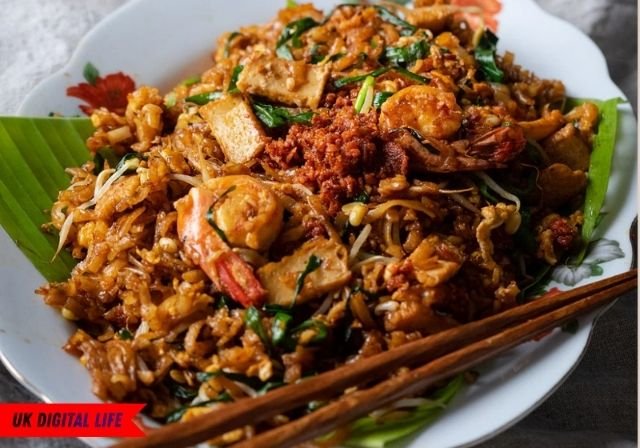

Char kway teow is one of the most famous street foods in Southeast Asia. It is known for its smoky aroma, soft flat rice noodles, and rich savory taste. This char kway teow recipe is cooked very fast over high heat, which gives the dish a deep flavor that stays memorable.
In recent years, char kway teow has become popular in UK, USA, and other Western home kitchens because Asian ingredients are now easier to find in supermarkets and Asian stores. Many home cooks now search for an authentic char kway teow recipe that works well without restaurant equipment.
This complete guide gives updated, correct, and practical information so you can understand the dish clearly and cook it with confidence at home.
What Is Char Kway Teow?
Char kway teow is a stir-fried noodle dish made with flat rice noodles, eggs, garlic, soy-based sauces, and protein such as shrimp or Chinese sausage. Any traditional char kway teow recipe follows this core structure.
The name comes from Chinese dialect words.
Char means stir-fry.
Kway teow means flat rice noodles.
The dish started as affordable food for workers. Street vendors cooked it quickly using strong fire and large woks. This cooking style creates a smoky taste called wok hei, which is still the main quality sign of a good char kway teow recipe today.
Ingredients for Char Kway Teow
Using the right ingredients helps keep the dish authentic while still practical for home cooking.
Main Ingredients
- Flat rice noodles – Fresh noodles are soft and slightly chewy
- Eggs – Add richness and help bind the noodles
- Garlic – Creates a strong base flavor
- Chinese sausage (lap cheong) – Sweet and smoky, very traditional
- Shrimp or prawns – Add natural sweetness
- Bean sprouts – Give crunch and freshness
- Chives or spring onions – Light onion aroma
- Oil or lard – Lard is traditional and adds deeper flavor
Modern Substitutes (Common in Home Cooking)
- Chicken instead of shrimp
- Mushrooms or tofu for vegetarian versions
- Neutral oil if lard is not available
These substitutions are widely accepted today, especially for home kitchens.
Char Kway Teow Sauce Recipe
The sauce is simple but balanced. Each ingredient has a clear role.
- Light soy sauce – Saltiness
- Dark soy sauce – Color and mild sweetness
- Oyster sauce – Depth and umami
- Sugar – Balances salty flavors
- Chili paste (optional) – Heat and spice
This sauce combination is still used in most traditional stalls, with small adjustments based on personal taste.
Best Noodles for Char Kway Teow
Fresh flat rice noodles are still the best option in 2026. However, many home cooks use dried noodles because they are easier to find.
Important tips:
- Fresh noodles should be loosened gently by hand
- Dried noodles must be soaked, not boiled
- Stir gently, as rice noodles break easily
If noodles stick together, add a small amount of oil instead of water.
Step-by-Step Char Kway Teow Recipe
Step 1: Preparation
Prepare and cut all ingredients before cooking. This dish cooks very fast.
Step 2: High Heat Cooking
Heat a wok or wide pan until it lightly smokes. Add oil.
Step 3: Flavor Base
Add garlic and Chinese sausage. Stir for a few seconds until fragrant.
Step 4: Noodles and Sauce
Add the rice noodles and sauce together. Toss quickly so the noodles absorb flavor evenly.
Step 5: Eggs and Protein
Crack the eggs into the pan and let them set slightly. Add shrimp and mix gently until just cooked.
Step 6: Final Touch
Add bean sprouts and chives. Stir-fry briefly and remove from heat.
This timing prevents soggy noodles and keeps flavors strong.
How to Get Real Street-Style Flavor
Wok hei is the smoky flavor created by very high heat.
To improve wok hei at home:
- Use the highest heat setting
- Cook one serving at a time
- Avoid adding water or extra sauce
- Use a carbon steel wok if possible
Even without restaurant equipment, these steps greatly improve flavor.
Regional Differences You Should Know
Char kway teow changes slightly by region.
- Penang style – Lighter and more seafood-focused
- Singapore style – Often darker and slightly sweeter
- Home-style versions – Less oil and more vegetables
All versions are valid, and modern recipes often blend styles.
Nutrition and Health Considerations
Char kway teow can be rich, but it is adjustable.
- Generally high in carbohydrates and protein
- Oil level depends on cooking method
- Can be made lighter with less oil and more vegetables
Many home cooks now use better heat control to reduce oil without losing flavor.
Char Kway Teow Variations
- Chicken version – Good for those who avoid seafood
- Seafood version – Uses shrimp, squid, and fish cake
- Vegetarian version – Uses tofu, mushrooms, and soy-based sauces
These versions are now common and widely accepted.
Common Mistakes to Avoid
- Cooking on low heat
- Cooking too many servings at once
- Using too much dark soy sauce
- Overcooking the noodles
Avoiding these mistakes keeps the dish balanced and fresh.
Serving and Storage Tips
Char kway teow is best eaten immediately.
- Serve hot
- Do not refrigerate if possible
- Reheating reduces texture and aroma
If reheating is needed, do it quickly on high heat without adding water.
FAQs
Is char kway teow always unhealthy?
No. Oil level depends on cooking style and portion size.
Can beginners cook this dish?
Yes. Preparation and small portions make it easier.
Is wok hei required?
It improves flavor, but the dish can still taste good without it.
Conclusion
Char kway teow remains one of the most iconic noodle dishes today. While it started as simple street food, it has evolved with modern home cooking habits. By understanding ingredients, heat, and technique, you can cook an authentic char kway teow recipe at home with excellent results.
Char kway teow is part of a wider tradition of Malaysian street food that focuses on bold flavour, simple ingredients, and fast cooking. If you enjoy cooking authentic dishes like this char kway teow recipe, exploring other classic Malaysian foods helps you better understand the cooking style, ingredients, and cultural roots behind these well-loved recipes.
