
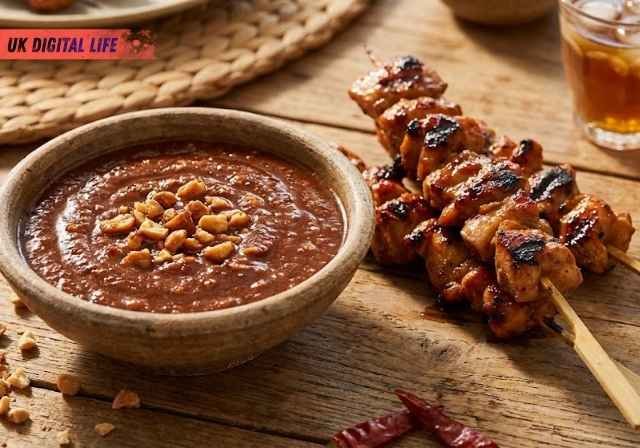
If you have ever tasted satay at a Malaysian street stall, you know the sauce is the real star. It is thick, nutty, gently spicy, and deeply savoury, with a flavour that cannot be copied by bottled sauces or peanut butter shortcuts. This is the taste people remember and search for when they look for an authentic satay sauce recipe.
In Malaysia, satay sauce is not rushed or improvised. It is slowly cooked using roasted peanuts, dried chilies, aromatics, and palm sugar, following methods passed down through generations. The balance matters. The texture matters. Even the oil rising to the surface matters.
This step-by-step guide shows you how traditional Malaysian satay sauce is truly made, why each ingredient is important, and how to get the same deep flavour at home — just like the sauce served at real satay stalls.
What Is Satay Sauce?
Satay sauce is a traditional Malaysian peanut-based sauce served with satay, which are skewers of grilled meat cooked over charcoal. The sauce is always served warm on the side and is used for dipping, not pouring.
Although satay has roots in Southeast Asia, Malaysian satay sauce has its own identity. It is thicker, less creamy, and more savoury than many modern versions found outside Malaysia. The sauce is judged by flavour balance, not sweetness alone.
Regional Differences in Malaysian Satay Sauce
While the base method stays the same, satay sauce varies slightly by region in Malaysia.
In Kuala Lumpur and Selangor, the sauce is usually thick, dark, and rich, with strong peanut flavour and moderate sweetness.
In Penang, satay sauce tends to be spicier due to heavier chili use.
In Johor, the sauce can be slightly sweeter, influenced by nearby Indonesian cooking styles.
These variations are subtle, but all authentic Malaysian satay sauces rely on the same core ingredients and slow-cooking process.
What Makes This Satay Sauce Authentic?
Authentic Malaysian satay sauce follows a few essential rules.
First, it uses whole peanuts, not peanut butter. The peanuts are roasted or fried and then ground. This creates a natural oil release and correct texture.
Second, the sauce starts with a fresh chili paste made from dried chilies, shallots, and garlic. This paste is cooked slowly in oil to remove raw flavours.
Third, palm sugar is used for sweetness. It adds depth instead of sharp sweetness.
Finally, the sauce is simmered until oil separation occurs. A thin layer of oil rising to the surface shows the peanuts and spice paste are fully cooked. This step is critical and cannot be skipped.
Ingredients for Authentic Malaysian Satay Sauce
These ingredients reflect traditional Malaysian cooking practices.
- Raw peanuts
- Dried red chilies
- Shallots
- Garlic
- Palm sugar
- Tamarind paste or tamarind water
- Cooking oil
- Salt
- Water
Ingredient note:
Coconut sugar can be used if palm sugar is unavailable. Tamarind should be mild and balanced, never sour-dominant.
Why Peanut Butter Is Not Used in Authentic Satay Sauce
Peanut butter is already processed and contains stabilisers and added oils. This changes the flavour and texture of the sauce.
Traditional satay sauce relies on freshly ground peanuts, which release natural oils during cooking. This creates the correct thickness, aroma, and mouthfeel that peanut butter cannot provide.
Step-by-Step Authentic Satay Sauce Recipe
Step 1: Preparing the Peanuts
Roast or fry the peanuts until golden brown. Do not burn them. Let them cool fully, then grind into a coarse paste. The texture should be slightly grainy, not smooth.
Set aside.
Step 2: Preparing the Chili Paste
Soak dried chilies in hot water until soft. Remove seeds if you want less heat. Blend the chilies with shallots and garlic into a smooth paste using a small amount of soaking water.
This paste forms the flavour base of the sauce.
Step 3: Cooking the Sauce
Heat oil over medium heat. Add the chili paste and cook slowly, stirring often. This step removes raw taste and develops aroma. Do not rush it.
Add palm sugar and stir until fully dissolved.
Add the ground peanuts and mix well. Gradually add water to loosen the sauce. It should be thick but pourable.
Add tamarind and salt. Simmer gently for 10–15 minutes, stirring constantly to prevent burning. When a light layer of oil rises to the surface, the sauce is properly cooked.
Traditional cooks often prepare satay sauce in advance, as the flavour improves after resting.
Step 4: Adjusting Taste and Texture
Taste the sauce. The peanut flavour should be strongest, followed by gentle sweetness, mild heat, and light tanginess. Adjust salt or tamarind carefully. Avoid adding extra sugar.
Remove from heat and keep warm.
Texture, Colour, and Taste of Traditional Satay Sauce
Authentic satay sauce is thick but not sticky. It should coat a spoon and drip slowly.
The colour should be deep brown with a reddish tone. Pale or creamy sauces are not traditional.
The taste should feel balanced. Sweetness supports the sauce but never dominates.
Common Mistakes to Avoid
Using peanut butter instead of peanuts
Skipping the frying of the chili paste
Adding coconut milk, which is not traditional
Over-sweetening the sauce
Cooking the sauce too quickly
Avoiding these mistakes is key to authentic results.
How Satay Sauce Is Prepared at Malaysian Satay Stalls
At Malaysian satay stalls, satay sauce is cooked in large batches early in the day. It is kept warm and stirred regularly throughout service. Recipes are often passed down through families.
This slow and consistent preparation is why stall-style satay sauce tastes deeper than rushed versions.
How to Serve Satay Sauce Traditionally
Satay sauce is always served warm and on the side.
It is paired with chicken, beef, or lamb satay and sometimes served with rice cakes. The sauce is dipped into just before eating, not poured over the meat.
In Malaysia, satay sauce is often shared communally and placed at the centre of the table.
Storage and Reheating Tips
Store satay sauce in an airtight container in the refrigerator for up to 4–5 days.
Reheat gently over low heat and add a little water to loosen the texture. Stir frequently.
The sauce can be frozen, but slight texture changes may occur after thawing.
Is Satay Sauce Healthy? (Nutrition Disclaimer)
Satay sauce contains peanuts, which provide protein and healthy fats. It also contains sugar and oil, so portion control matters.
This information is for general knowledge only and is not medical advice.
FAQs About Authentic Satay Sauce Recipe
1. Is Malaysian satay sauce spicy?
It is mildly spicy and can be adjusted by reducing chilies.
2. Can authentic satay sauce be vegan?
Yes. Traditional satay sauce is plant-based.
3. What peanuts are best?
Raw, skinless peanuts give the best control over flavour.
4. Why does satay sauce taste better the next day?
Because the oils, chili paste, and sugar continue to blend, deepening flavour.
Conclusion
Authentic satay sauce is not about shortcuts or convenience. It is about patience, balance, and respect for tradition. When you use whole peanuts, cook the chili paste properly, and allow the sauce to simmer until the oils rise, you recreate the deep, nutty flavour found at Malaysian satay stalls and family kitchens.
This traditional satay sauce recipe delivers the correct taste, texture, and aroma that define real Malaysian satay. If you enjoy learning about traditional recipes like this, exploring other classic Malaysian Foods is a great way to understand the culture and flavours behind the country’s most loved dishes.