
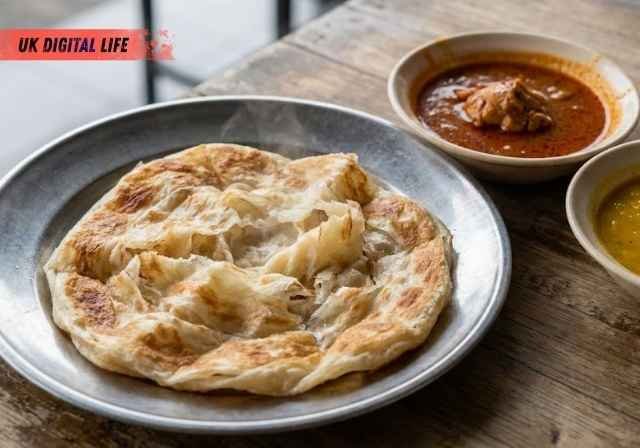
Roti canai is one of the most loved flatbreads in Malaysia and is widely recognised as a national comfort food. It is known for its crispy outside, soft inside, and flaky layers created through stretching and folding. Traditionally sold at mamak stalls, roti canai is eaten by people of all backgrounds and is available throughout the day.
People searching for a Roti canai recipe usually want an authentic Malaysian method, not a shortcut flatbread. This article explains the traditional technique used in Malaysia, why it works, and how to recreate the same texture at home using simple ingredients.
What Is Roti Canai?
Roti canai is a Malaysian flatbread made from wheat flour, water, fat, and salt. The dough is rested for several hours, stretched paper-thin, folded into layers, and cooked on a flat griddle.
While it shares roots with Indian flatbreads, roti canai developed its own identity in Malaysia. It is softer than paratha and less oily than some other layered breads. Today, it is officially recognised as part of Malaysia’s food heritage and is commonly served with curry, dhal, or sambal.
What Makes Roti Canai Crispy and Flaky
The texture of roti canai depends on gluten development and controlled resting. Resting relaxes the gluten strands, allowing the dough to stretch thin without shrinking. Oil between layers prevents them from sticking, creating separation during cooking.
Unlike bread that relies on yeast, roti canai relies on mechanical layering. Medium heat is essential because it allows the layers to cook evenly while creating surface crispness.
Ingredients Needed for Roti Canai
Roti canai uses basic ingredients, but their balance matters.
- All-purpose flour
- Water
- Salt
- Neutral oil or ghee
- Egg (optional but commonly used in Malaysia)
Egg adds tenderness and colour, but many street vendors skip it for cost and speed. Using oil instead of butter is traditional and helps keep the dough elastic during long resting periods.
Step-by-Step Roti Canai Recipe
Dough Preparation
Flour and salt are mixed first, followed by water added gradually. The dough should be soft but not sticky. Kneading develops gluten, which is necessary for stretching.
After dividing into balls, each piece is heavily coated with oil. This prevents drying and helps the dough relax. Resting for at least 4 hours is essential, but overnight resting produces the best results and is common practice at Malaysian stalls.
Shaping and Stretching
Stretching is done by gently pulling from the edges rather than pressing the center. Gravity helps thin the dough naturally. Traditional vendors stretch until the dough is almost transparent, which ensures fine layers.
Minor tears do not affect the final result once folded.
Folding for Layers
Folding traps oil and air between layers. Spiral folding is popular at stalls because it creates uneven layers, which improves flakiness after cooking.
A short rest after folding allows the dough to relax again before cooking.
Cooking the Roti
Roti canai is cooked on a flat griddle over medium heat. Excessively high heat causes burning before the layers separate. Gentle pressing during cooking encourages puffing.
Clapping the cooked roti loosens layers and improves texture, a technique commonly used by street vendors.
Common Mistakes to Avoid
Short resting time is the most common mistake. Another issue is using too little oil, which prevents proper layering. Cooking on high heat dries the bread instead of crisping it.
Consistency improves significantly after the first few attempts.
How to Serve Roti Canai
In Malaysia, roti canai is usually served plain with side curries rather than filled. Chicken curry, fish curry, and lentil dhal are the most common pairings.
It is often eaten by tearing pieces with the hand and dipping into curry, which enhances flavour balance.
Variations of Roti Canai
Modern variations exist, but traditional roti canai remains the benchmark. Roti telur adds egg during cooking. Sweet versions are served with sugar or condensed milk, especially for children.
Filled versions are popular but are considered adaptations rather than traditional forms.
Storage and Reheating Tips
Fresh roti canai has the best texture. If storing, refrigeration is preferred over freezing for short-term use. Reheating on a pan restores crispness better than microwaving.
Conclusion
Roti canai is not complicated, but it is technique-driven. Proper resting, gentle stretching, and controlled heat are what create its signature crispy and flaky texture. With patience and practice, this authentic Malaysian roti canai recipe can be successfully made at home using simple ingredients.
If you enjoy traditional dishes like roti canai, exploring more Malaysian food helps you understand how flatbreads, curries, and street meals come together as part of Malaysia’s everyday eating culture.
FAQs About Roti Canai
1. Is roti canai the same as paratha?
They are related but not identical. Roti canai is generally softer, thinner, and more elastic due to longer resting and stretching.
2. Can roti canai be made without egg?
Yes. Many traditional stalls do not use egg.
3. Why is my roti not flaky?
Insufficient resting, thick stretching, or lack of oil between layers are the usual causes.