
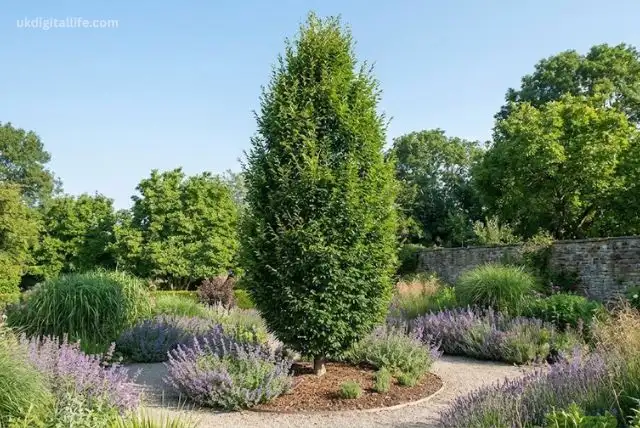
Carpinus fastigiata is a popular ornamental tree used in gardens, parks, and urban landscapes. Gardeners like it because it grows tall without spreading too wide, making it perfect for small gardens and narrow spaces. Its strong structure, neat shape, and low maintenance needs make it a reliable choice for modern landscaping.
This article explains what Carpinus fastigiata is, how big it grows, how it looks throughout the year, and why it remains one of the most loved columnar trees among gardeners today.
What Is Carpinus Fastigiata?

Image source: pinterest.com
Carpinus fastigiata is a cultivated variety of the European hornbeam. Its botanical name is Carpinus betulus ‘Fastigiata’. The word “fastigiata” means upright or column-shaped, which perfectly describes how this tree grows.
It is a deciduous tree, but unlike many others, it keeps many dry leaves on its branches during winter. This feature, called marcescence, helps the tree maintain privacy and structure even in colder months.
Size and Shape of Carpinus Fastigiata

Image source: pinterest.com
Carpinus fastigiata is known for its slim and upright growth habit.
At full maturity, it usually reaches 30 to 50 feet in height. Its width stays narrow, usually 15 to 25 feet, depending on age and growing conditions. When young, the tree looks very tight and vertical. As it matures, it becomes slightly wider but still keeps a clean and tidy shape.
Because of this predictable form, it works well near buildings, paths, and boundaries without overcrowding the space.
Growth Rate and Lifespan

Image source: pinterest.com
This tree has a moderate growth rate, growing about 12 to 24 inches per year in good conditions. It is not fast-growing, but it is steady and easy to control.
Carpinus fastigiata is also long-lived. With proper care, it can live 80 to 150 years, making it a strong long-term choice for gardens and public landscapes.
Leaves, Bark, and Seasonal Appearance

Image source: pinterest.com
In spring, the leaves emerge light green and soft. During summer, the foliage becomes dense and darker green, providing good shade. In autumn, the leaves turn yellow to golden brown.
In winter, many dry leaves stay attached to the branches, especially on hedges. The bark is smooth and grey, developing a slightly fluted appearance as the tree ages, which adds winter interest even without fresh leaves.
Root System and Planting Distance

Image source: pinterest.com
Carpinus fastigiata has a strong but non-invasive root system. The roots anchor the tree well, making it resistant to wind damage.
For best results, plant the tree 1.5 to 2 metres away from buildings, walls, driveways, or paved areas. This spacing allows healthy root growth while keeping nearby structures safe.
Soil Type and pH Preference

Image source: pinterest.com
This tree adapts well to different soil types, including clay, loam, and sandy soil, as long as drainage is reasonable.
Carpinus fastigiata prefers slightly acidic to neutral soil, with a pH range of 5.5 to 7.5. It can tolerate mildly alkaline soil but grows best when the soil is rich and well-prepared.
Water Needs at Different Growth Stages

Image source: pinterest.com
Watering needs change as the tree grows.
- Young trees: Need regular watering for the first 2–3 years
- Established trees: Only need deep watering during long dry periods
Once mature, the tree becomes fairly drought-tolerant.
Climate and Urban Tolerance

Image source: pinterest.com
Carpinus fastigiata grows best in temperate climates. It handles cold winters, summer heat, wind, and light drought very well.
It is also highly tolerant of air pollution and compacted soil, which makes it a popular choice for city streets, parks, and modern urban developments.
Why Gardeners Love Carpinus Fastigiata

Image source: pinterest.com
Gardeners and landscapers choose this tree because it offers many benefits:
- Naturally upright and tidy shape
- Low maintenance
- Strong and wind-resistant
- Suitable for small gardens
- Excellent for privacy and screening
- Long lifespan
It works well in both traditional and modern garden designs.
Hedge Spacing and Screening Use

Image source: pinterest.com
When planted as a hedge or screen, Carpinus fastigiata trees should be spaced 60–90 cm apart. This spacing helps them grow together into a dense, tall barrier over time.
Because it keeps dry leaves in winter, it provides better year-round privacy than many deciduous trees.
Common Problems and Limitations

Image source: pinterest.com
Carpinus fastigiata is generally trouble-free, but a few minor issues can occur:
- Leaf scorch during extreme drought
- Aphids in rare cases
- Slow growth in very poor or compacted soil
These problems are uncommon and usually easy to manage with basic care.
Carpinus Fastigiata vs Beech (Fagus)

Image source: pinterest.com
Many gardeners compare hornbeam with beech. Here are the key differences:
- Hornbeam holds dry leaves better in winter
- Hornbeam tolerates heavier and clay soil
- Beech prefers lighter, well-drained soil
This makes Carpinus fastigiata more reliable in mixed or difficult soil conditions.
Can Carpinus Fastigiata Grow in Containers?

Image source: pinterest.com
Carpinus fastigiata can be grown in large containers when young. However, as it matures, it performs best when planted in the ground.
If grown in pots:
- Use a large, deep container
- Water regularly
- Repot or plant in the ground after a few years
Wildlife and Environmental Value
This tree supports urban biodiversity. It provides shelter for birds and insects and contributes to greener city environments.
Landscaping Uses

Image source: pinterest.com
Carpinus fastigiata is commonly used for:
- Avenue planting
- Garden boundaries
- Privacy screens
- Formal hedges
- Street and park landscaping
Its narrow form makes it ideal where height is needed without taking up space.
FAQs
Is Carpinus fastigiata good for small gardens?
Yes, its slim shape makes it perfect for limited space.
Does it need regular pruning?
No, light pruning once a year is enough.
Is it suitable for city areas?
Yes, it handles pollution and compact soil very well.
Does it give shade?
Yes, its summer foliage is dense and shady.
Conclusion
Carpinus fastigiata is one of the best columnar trees available for modern gardening. Its narrow shape, strong structure, soil tolerance, and low care needs make it a favourite among gardeners and landscapers. Whether used as a hedge, screen, or feature tree, it offers beauty, privacy, and reliability for many years, making it a smart and lasting choice for any landscape.