
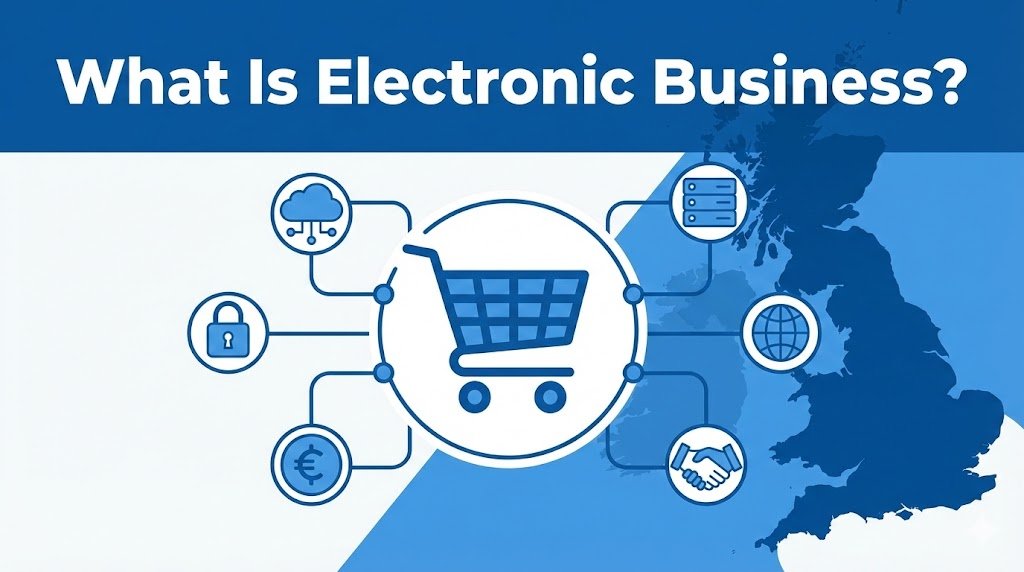

Electronic Business is now a central part of how companies operate in the United Kingdom. It involves using the internet, computers and digital tools to complete business tasks. British companies manage sales, support, stock, payments, marketing, and communication online. Customers shop from home, use apps to order services, pay bills digitally, and enjoy quick delivery. These behaviours show how much Electronic Business has grown in daily UK life.
Businesses use Electronic Business to reach more customers, lower operating costs, and provide faster services. Even small shops or home-based workers can use online tools to find buyers nationwide. Electronic Business allows companies to remain active 24 hours a day without depending only on physical stores and face-to-face services.
This article explains the meaning of Electronic Business, how it works, different types, real UK examples, benefits, challenges, market situation, technology influence, and future developments.
What Is Electronic Business (E-Business)?
Electronic Business means running business activities using the internet and digital technologies. It includes selling goods and services online but is not limited to that. It covers everything from internal company systems to customer-facing functions — such as inventory management, internal communication, payroll, marketing, customer support, website management, and digital payments.
For example, a company using email for communication, digital tools for stock management, software for salaries, and a website or app for marketing and sales is practicing E-Business. This reduces paperwork and speeds up communication, planning, and execution inside the business.
Electronic Business thus transforms almost every aspect of a business — not just how it sells, but how it operates internally and interacts with customers and partners externally.
Electronic Business vs E-Commerce
E-Commerce refers specifically to buying and selling goods or services online — the transaction between customer and business.
Electronic Business (E-Business) is broader: it includes e-commerce as well as the internal and backend digital processes (stock, HR, logistics, CRM, marketing, after-sales support, data analysis, etc.).
- If a UK shop sells products only via a web store — that’s e-commerce.
- If the same shop also uses digital tools to manage inventory, logistics, delivery, customer support, payroll — that’s full E-Business.
In modern digital transformation, E-Business is more essential than just having an online store, because it streamlines the entire business lifecycle.
Types of Electronic Business
Business to Business (B2B)
Businesses sell products or services to other companies online. In the UK, wholesalers supply retailers through online ordering systems that track stock and delivery.
Business to Consumer (B2C)
Businesses deliver goods directly to customers through websites and apps. Online shopping is the most popular form of this type in the UK.
Consumer to Consumer (C2C)
People sell products to other individuals through online marketplaces. It allows people to sell used items, handmade crafts or local goods.
Consumer to Business (C2B)
Individuals provide services to companies. Many UK freelancers earn through design, content creation and marketing services offered digitally.
Business to Government (B2G / B2A)
Businesses interact with government systems online. This includes tax filing, form submissions and licence applications.
Together, these types show how E-Business supports many roles in the UK economy — from retail, to services, to supply-chain, to public administration.
How Electronic Business Works
Electronic Business works by transferring traditional business methods into online systems. First, a company creates a digital presence such as a website or mobile app. Customers can view services or products at any time. Orders are placed using secure digital payment methods.
Once the order is placed, the business processes it through automated systems. Digital logistics tools organise delivery. Customer information is saved in secure databases. Support teams assist customers through online chat or email.
Inside the company, employees use software to manage stock, sales, and budgets. Digital data helps businesses understand what customers like, which improves decision-making.
Because Electronic Business is always active, customers can buy products early in the morning or late at night. It removes limits of time and distance, which gives companies greater reach across the UK.
Examples of Electronic Business in the United Kingdom
Retail and Online Shopping
Customers browse websites and apps for products like clothing, mobile phones, books, and home goods. Delivery companies bring them to their homes quickly.
Food Ordering and Delivery
Restaurants accept online orders, share their menus digitally and deliver meals through delivery partners.
Finance and Banking Services
Banking apps allow customers to manage accounts, make payments and transfer money without visiting branches.
Online Learning and Skills Development
Students attend digital classes, download study materials and complete tasks online.
Remote Work and Freelance Services
Freelancers provide writing, design, marketing, and technical services through digital platforms.
Entertainment and Streaming
People access films, music, sports and series instantly without buying physical media.
Electronic Business in the UK is not limited to large brands. Small businesses also gain attention at a national level through online visibility.
Benefits of Electronic Business
Benefits for Businesses
Electronic Business lowers the need for large physical locations. It allows companies to serve customers anywhere in the country, giving them a bigger market. Business data remains organised and easy to access. Digital decision-making leads to better product choices and resources are used more wisely.
It also reduces staff needs for physical tasks such as manual inventory checks. Companies can expand quickly without spending heavily on new shops.
Benefits for Customers
Customers get more choices and can compare prices anytime. They can order from home at any hour. Digital payments make transactions quick. Customer questions are solved faster because businesses can respond online.
Benefits for the UK Economy
Electronic Business increases economic activity by supporting job growth in areas such as delivery services, information technology and digital marketing. It also helps small UK businesses compete with global brands, which encourages a strong business environment.
These benefits explain the growing success of Electronic Business in the United Kingdom.
Challenges of Electronic Business
Despite the benefits, Electronic Business has challenges that companies must address.
Online security is an important issue because businesses store customer information digitally. If a system is not protected, data theft may occur. Customers sometimes feel unsure about product quality since they cannot physically check items before buying. Delivery delays may disappoint consumers.
Competition online is intense. Many companies sell similar goods, so building trust and reputation becomes important. Digital systems require investment and technical skills. If a website has an error, customers may look elsewhere.
These challenges show that Electronic Business needs careful planning and continuous improvement.
Electronic Business in the UK
The United Kingdom is recognised as one of the strongest digital markets in the world. Online sales form a large portion of total retail activity, and this number continues to rise. Customers appreciate fast delivery options and convenient ordering methods.
UK government services support business activities digitally. Registration, tax submissions, licences and other processes are available online. This encourages new business development and saves time.
Small and medium enterprises take advantage of Electronic Business because it gives them the ability to grow without heavy investment. British customers expect excellent service and reliable delivery, which leads companies to improve constantly.
Electronic Business has become a common and expected part of business life in the UK.
Role of Technology in Electronic Business
Technology supports every part of Electronic Business. High-speed internet ensures smooth connections between customers and businesses. Digital payment tools allow safe and fast transactions. Cloud storage offers a secure place to keep records without using physical files.
Mobile apps make shopping easier. Marketing tools allow businesses to reach the right audience. Delivery technologies provide tracking details for customers. Customer support systems help businesses solve concerns more quickly.
Technology allows Electronic Business to be affordable even for small companies. It helps businesses collect important information that leads to smarter business decisions.
Future of Electronic Business in the UK
The future of Electronic Business in the UK is expected to remain strong. Online shopping will continue to increase as customers want simpler ways to buy goods. Delivery times may become even faster, and more areas will have full delivery coverage.
Businesses will combine physical and online services to give customers more flexibility. Remote work will stay common and more people will offer skills online. Electronic Business will help UK companies remain competitive in the global market.
With every improvement in technology, Electronic Business becomes more advanced, safer and better for both customers and businesses.
Conclusion
Electronic Business is shaping the modern economy of the United Kingdom. It allows companies to grow quickly, reduce costs and connect with customers anytime and anywhere. With more than 28% of retail sales now happening online, the digital market is becoming essential for business success in the UK. Whether a company is large or small, using online tools for sales, delivery, payments and support creates new opportunities.
The future of Electronic Business in the UK is bright. Technology will continue to improve services, make security stronger and offer even faster buying experiences. Businesses that adopt digital systems early will stay ahead of competition. In today’s world, going digital is not simply an option — it is the key to success.
FAQs About Electronic Business
1. What is Electronic Business in simple words?
Electronic Business means doing business online using the internet. It includes selling products, taking payments, talking to customers, and handling other business tasks through websites and apps.
2. Is Electronic Business and e-commerce the same thing?
No. E-commerce is only online buying and selling. Electronic Business is bigger and includes all online work a business does, even inside the company.
3. How does Electronic Business help customers in the UK?
It gives more choices, better prices, and fast delivery. Customers can shop anytime from home and get help online quickly.
4. Can small businesses also use Electronic Business?
Yes. Small shops and home-based workers in the UK can sell online, take digital payments, and reach more customers without a big shop.
5. Is Electronic Business safe?
Yes, it can be safe if businesses use secure payment methods, protect data, and stay honest with customers. People should also be careful while sharing personal details online.
